Quinn Taber: The power of Immersion
Kris Broholm interviews Quinn Taber about his immersive experience learning Arabic in the Middle East. They discuss practical tips for incorporating immersion from anywhere, evaluating its effectiveness, and whether other methods are necessary. Quinn also shares insights from his immersion-focused language learning startup.
May 21, 2018 · 49 min
EP 119: Quinn Taber: The power of Immersion
0:00 / 48:38
Guest
Quinn Taber
What You'll Hear
- 1 Introducing Quinn: Immersion and a New Startup ▶ 0:00
- 2 My Global Childhood and Refugee Motivation ▶ 3:00
- 3 Arabic Frustrations: Grades vs. Conversation ▶ 8:00
- 4 The 'English Curse' in American Schools ▶ 15:00
- 5 Breakthrough: True Immersion in Jordan ▶ 22:00
- 6 Why Both Immersion and Grammar Matter ▶ 29:00
- 7 Immerse.online: Interactive, Online Immersion Platform ▶ 35:00
- 8 Top Tips & My Hebrew Immersion Experiment ▶ 43:00
Links Mentioned
Questions Covered in the Show
What motivated Quinn Taber to learn foreign languages and travel?- 2m
What challenges did Quinn Taber face learning Arabic using traditional methods?- 7m
What specific immersion strategies did Quinn Taber use to become fluent in Arabic?- 17m
Is language immersion alone sufficient for fluency, or is traditional study also necessary?- 21m
What is Immerse.online and how does it facilitate online language immersion?- 28m
What are Quinn Taber's top tips for effective language learning?- 36m
Related Episodes
See all →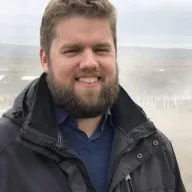
Hey guys, today I am really excited to bring you episode 119 of the actual fluency podcast. On the show today, I've got Quinn Taber, who's going to be talking about his experience with immersion, spending several years in the Middle East learning Arabic. And he's also going to be sharing a little bit about his language learning startup that's going to be very much revolving around immersion. So if you want more information on that, you can go to immerse.online and and read more information about that.
Otherwise, I encourage you to just listen to the episode and try to get more immersion into your life because I think a lot of the time immersion is is some more times overrated and underrated. it's definitely underused, but sometimes people think that the only way to learn language is to immerse yourself, to actually go to the country. I don't think that's true at all. Uh I think that is a limiting belief that it's actually an excuse most of the time. And sometimes it becomes a bit of a crutch uh when you're actually learning languages because you can learn so much with a tutor of a Skype, you can do so much with textbooks, with audio programs, all the software that's been developed, all these great books.
Um, of course, to learn how to converse in a language, you really need conversations. I mean, that's quite obvious. But I think that people can definitely do more immersions and during the episode we discuss a few few tips and tricks on how people can do it from anywhere. And also what kind of immersion is the best, you know, do can you do it all with immersion or do you need to supplement with anything else?
Uh of course the whole episode is centered quite around uh today's guest's personal experiences, which I have made it a sort of a strategy now for the actual fluency podcast. I decided back in the day that it was going to feature stories and inspiration tips and tricks, methods, everything really. Um, but it also had certain elements along the way that was sort of more practical and more direct or maybe more weekly. And and recently I've I've kind of gone back into this idea that the episodes are mostly about stories. And yeah, the stories have patterns and and topics and themes, but in in really behind every lesson, I think there's a story. So I hope that I've succeeded in presenting that this week.
Just a little quick shout out to the show sponsor Glolossa. If you want to try out an audio program that's based around space repetition sentences with a hands-over approach with daily reps, and lots of different exercises that you can use, and you get access to 50 languages, 50 plus languages, I believe. Uh so it's perfect for the aspiring polyglot who want to triangulate some of their language skills. You can give it a try for free at tryglolossa.com. And um yeah, let me know what you think. And enjoy the episode with Quinn Taber. And here I we get started with a little question on what his background was like, like how did he get into languages, traveling and and foreign cultures. So let's hear what he has to say.
predominantly Paris, but we traveled a lot and then we moved back to California, where my mom is from, uh when I was in grade school. But then, even through high school, college, kind of kept traveling. So, went to university in Los Angeles, but studied for a year in Europe, and then spent a lot of time in the Middle East. I, so, where am I from? Kind of everywhere, it feels like sometimes.
That's cool. That's cool. And uh so I guess the traveling bug uh gave you the uh the interest in other cultures and and I guess particularly relevant to this podcast, the languages of other cultures.
Exactly. Yeah, 100%. Um, a big one for me was actually the refugee crisis. So, in 2012, 2013, I heard about what was happening with the Syrian refugees in the Middle East. And it just grabbed my heart. I I didn't know what to do with it. I'm like, wait, how am I supposed to stay in these really nice places in California or France, when I know about these 10 million people that are stuck in camps. They don't have food or sanitation or anything.
Um, and because I had traveled so much, it it felt kind of easy. I'm like, I'll just go there. I'll spend a couple weeks there, see if I can be helpful. And that made the bug get even worse. I'm like, now I really want to stay there and not go back to California. Uh so the time, the first time I went, I was 19 years old. Um, I had lived in a couple different countries, but I had never lived in a refugee camp. Uh so moved out, uh spent five weeks there for the summer, and then kept going back on winter break and summer. Um through college, and then joined this big refugee organization and lived in the Middle East for the last three years. Wow. It was a long epic adventure. Yeah.
Can imagine lost to go into there. So, so whereabouts did you live in different places or is it mostly in one place?
Yeah, so I, uh, I moved first to Beirut, which is uh, actually a pretty like western city. And really enjoyed it. Uh, lived in the kind of the western part of the city where a lot of the Americans live. Um, and this is probably the start of my, I know, the start of my my language adventure. Uh because I had grown up traveling a ton and particularly in French speaking countries. I had uh, picked up French as a kid, kind of immersively, because I went to a French school and my parents spoke French.
But then, when I was in Beirut, I had this problem that all my friends were having, which was we were learning Arabic in like the local kind of American school with all the other American students. And then we would go outside and try to speak with like one or two locals to actually get the conversational skills and weren't getting anywhere.
Right.
It was so tough. So that was kind of the big intersection in my language journey was I, I thought that I was good at languages, because I had grown up in these different immersive settings, I'd grown up in places that spoke French, so I learned French kind of naturally. And then tried this adventure of learning Arabic, and because I don't think I really had the right methodology around it, I would spend all this time memorizing flashcards, all this time memorizing flashcards, and wasn't getting anywhere. It was it was killing me. Yeah.
Well it's a tough language, isn't it? I mean as a as an English native speaker or most of Europe, I suppose, Arabic is a quite a different beast in many ways.
Yeah. I completely agree. I know. They say that Arabic competes with Mandarin for the hardest language on Earth. Uh and I think that was part of my my disappointment was I was always the the student growing up that got really good grades. I like would work hard and study hard and then get an A and be like, oh, check that off the list. I got it. I'm good. I can move forward.
And I'd memorize all the flashcards and take all these kind of classic uh language courses. And I'd get A's, but the conversational piece, I like, I felt like I was missing it. Um, and it despite like getting an A on the Arabic test, when I would actually be in town trying to speak, it was like it was an entirely different thing. Like I had been practicing all the wrong stuff. Yes, I could get an A on the test, but the actual conversational thing, I hadn't prepared for at all.
Right. Well it's almost like they are different things, you know. Educators of the world pay attention.
I know, everyone listen. Yeah, so that's uh it kind of began this this journey of having to reconstruct how I saw languages, and thus like almost building my own method to become fluent in Arabic, not just reading and writing, but actually being able to have a conversation with the guy down the street.
Yeah, it was this little like two or three month identity crisis of, I don't think I'm getting anywhere. So I had to go back to the bottom and start over like, wait, so how do I learn this? I thought I was good at languages. I thought this would come easy. I was able to do French in my sleep, but Arabic, I need to figure this out from the ground up.
Yeah, and and I bet there are people listening now who's like, I've been learning Arabic for 30 years. This guy doesn't know what he's what he's getting himself into. This is a you know, this is just a beginning, man, you know.
Yeah, I know, I agree. I think, uh, anyone that both uh learns Arabic or I'm also uh an entrepreneur now, anyone that signs up for those two endeavors have to be pretty, I would say not just optimistic, but naive, because it's not a not an easy endeavor. Um, but it is possible. That's my that's my main takeaway.
Yeah, uh so what kind of um, did you have any language in school, like uh America obviously one of the notorious uh monolingual countries. Uh in which is interesting because you got so many different cultures and and and immigrants and like the languages are, the family languages are still quite alive, but it seems like for a large majority of people, uh language classes or language uh success is kind of a almost a myth. language second language.
So, so what was your experience in in the school system? Did you get any offers even or what was it like?
That's a good question. Yeah, that's the perfect question. Um, I think if anything, America broke me. They made my language learning journey way too hard because like I said, I assumed that when I got an A on the test, that meant I was fluent. Uh and that's kind of how I've come to my like transformation of how I see language and like really true fluency, not the A1 A2 being able to write some sentences. Uh, but that next level, it has to happen outside the classroom.
Um, because I did so I did Spanish for a year or two in school and then jumped over to French again and uh I'm going to be totally honest, I felt like I was cheating a little bit on French because I had grown up there. So I got really easy A's on that one. And just kind of slipped by. Um, but that was I think kind of the core of my diagnosis is the reason that I wasn't able to really have these breakthroughs I wanted in Arabic years later is in America, my Spanish teacher said, yep, you're fluent because you've passed the first three levels of our classroom. Um, and they had turned language into such a academic like subject. Uh, but I never actually like flexed my language muscles in real practice.
It's a real shame yeah.
Yeah. I totally agree.
That happens everywhere. Like in the, in the in the in the European universities, often people will go through let's say three to five years of a master's degree and they'll know everything about the language. They know everything about the history. They can even cite passages from the great classics in the language. But ask them to have a normal conversation and they they they just can't because it's not part of for many what a university degree is, which is complete completely ridiculous.
I could not agree. Yeah, that's the the joke that me and my buddies have is we passed our Spanish class, but now years later if we went down on a a surf trip to Mexico, I couldn't put a sentence together.
Oh yeah. You in California
Like I don't even know how to order tacos.
This like me learning Spanish in the middle of the UK, okay, maybe you can see some limitations there. But I imagine California must be like rich in in in the Latin American culture and must be loads of Spanish speakers also. So there's really no excuse if you live in California.
I I know, you're calling me out and it's deserved. I completely agree.
Well, more more your country. I think they you you do well, I think to be more uh more encouraging to learn the other languages. I think that would be be good. But but what is it like in in America, like what's the language learning uh kind of environment like now because, you know, Europe I think uh maybe because we're so many countries next to each other in different languages. I feel like it seems a little bit more normal to talk about and people seem to have more languages on average. But but talk talk us through how like what's your feeling in the US like now you're you're you're doing entrepreneur in in language learning as well. So how do people react when you say that or when you say, oh, I also know Arabic, you know, what what kind of reactions do you get and
Yeah. Man. That's such a good question. Um, I think especially Americans, but anyone that has English as their first language, it feels a little bit like a like a curse because everywhere you go, at least in my experience, everyone speaks English. At least a little bit. And then so when I'm in when I'm in France, the French people in France that I want to practice my French with, their English is way better than my French is. So I'll get one or two sentences of French. And then they'll just kind of laugh at me like, oh, nice try. And then they respond with perfect English. I'm like, ah, I got my practice.
Uh so that's the sad part is I think so many of my American friends because we've been super lucky and we've traveled a lot. So I'm right now 24 and I'm about to book a flight to visit my 50th country, and I'm so excited.
Wow. Yeah, that's amazing.
Yeah. So this summer I'm going to, yeah, yeah. I, but I think that's the hard part is for me and my buddies, we have it too easy. We go to Thailand and people speak English. We go to Mexico and people speak English. We go to Paris and people speak English.
I heard a lot of Americans don't have a passport even.
Exactly.
Is that true?
Ooh. That's a good question. Man.
I mean if you don't know it, then you don't know about it.
I would I feel like I heard that like one in one in two or like something ridiculous didn't have a passport in the US even. It's kind of hard to imagine people learning languages if they're not even interested in leaving the country for at least a week or something.
I know.
I know.
But anyway, this wasn't supposed to be like I want to look it up on Google now. This wasn't supposed to be like the doom and gloom of American language learning, but I just feel like uh it's not it's not often that I have Americans on the show, so I like pounced on the on the opportunity to grill you a little bit on the status of your country's language learning. Um,
Yeah, but but tell me, honestly, tell me a little bit more about your experience learning Arabic because or perhaps more about the experience living in the Middle East because that must have been some culture shock even if if Beirut was quite, you know, a modern city. Like what kind of challenges do you have adapting to it and and how did you feel your experience changing as you got better and better in Arabic?
Ooh, man, that's another great question. Um, Beirut. I like this a lot. Beirut is a really interesting city. It's actually, so like I said, I'm about to go to my 50th country, which I'm secretly a little proud of. Uh, but Beirut is actually one of the most diverse, like cross-cultural cities on Earth. Uh, they say it's been kind of the like the highway between the East and the West for so long. There's Americans, French, Syrian, Egyptian, uh even Chinese. So it's this big hodgepodge. Uh, which in many ways a lot of fun, that's for sure. Um, like the nightlife is fun, the people are really rich, the food's great.
Uh, for me, and this is kind of my unique story, is I spent the first year and a half there hanging out with predominantly Americans and Europeans. Um, getting away with the French I knew, because a lot of people speak French there. And my kind of heightened uh, disappointment with my Arabic kept growing. I'm like, oh, okay, I I put in another 20 hours this week. I don't feel like I'm getting anywhere. I put in another 25 hours. I'm not really getting anywhere.
And then I hit this breaking point about halfway through where the like disappointment of not learning Arabic and not getting conversational skills was greater than the comfort I had. So I said, dammit, I need to change something. So I actually, I moved to a different area in Jordan where no one speaks English. So I just threw myself in the deep end, and I at that point I still didn't really have a method to it. I just knew I had to change something.
And I had heard about this group of folks that are all Westerners who spoke perfect Arabic because they just they totally cut off their English. So they moved into Bedouin camps and to refugee camps and lived with Arabs who didn't speak English. And in a couple of months, they had this huge breakthrough. Um and I was so envious. I'm like, all right, I'll move somewhere that doesn't have electricity or running water or kind of a downgrade in quality of life. But if it gets me speaking Arabic, it's worth it. I just got to go for it.
Wow. That's uh quite adventurous, I would say, for most people. I mean, you're already in quite a foreign country. You're in the other part of the world and you're like, this isn't foreign enough.
Yeah.
So, so what happened then? So you went to you went off the grid in a way. You went a little bit further out. Uh what what happened then?
Yeah, it it changed everything. Um, I I literally, I stopped hanging out with the Americans and I had been reading about these different really thoughtful people who believed that the only way to truly learn a language is immersion. And a lot of the kind of philosophy behind their thought process is how do you emulate the experience that a a young child has learning their their parents' language, just by doing. Um, anyone that cares about languages, heard it a dozen different ways and a dozen different times.
Um, but the idea that in order to really engage, you have to be with people that only speak that target language. If you can, you want to be with people that are really, they use the word like compassionate or nurturing. Um, just like when I was little with my mom. Uh, because when I was hanging out with other young guys and I'd make an Arabic mistake, they'd laugh at me and be like, oh, you you said a naughty word, whoops. Like, ah, dang it.
Where in these refugee camps, in these Bedouin camps, I would actually hang out with the other moms, because they were the ones that would treat me with all this compassion. And if I would make a mistake, they'd be like, oh, it's okay. Try saying it this way. I'm like, oh, all right. Uh, so by simulating, yeah, yeah, yeah. By simulating what these other kids were doing, at a different point, this is a little embarrassing, but I literally would go hang out in the preschool. I haven't told that to many people. But that was the place that I could make mistakes and I wouldn't feel super embarrassed. I'm a kind of a cocky guy. I think every guy is that I didn't want to hurt my pride by making all these mistakes. But if I hung out with the moms and the five-year-olds, I was good. They wouldn't they wouldn't make fun of me for pronouncing something. Right. Um, yeah, so I, go ahead. Do you have a question? Are you going to make me keep?
No, no, I was just I was just going to say that's you're probably adapting your environment to your level maybe. I mean, you were kind of like a young Arabic speaker yourself.
Exactly. Yeah, no, I fit in. Yeah, it was it was a perfect fit. Um, so that was a big piece that uh I had been reading about in this immersive philosophy was be with people that are nurturing, that will allow you to make mistakes, kind of copy what the child's experience is.
Um, and then the only other one was just do a lot of real life experiences. I felt like after taking a couple years of Arabic, I knew the technical words for uh business and I I kind of had reached a high level of my technical understanding, but I still couldn't order a falafel. And I still couldn't hail a cab or figure out how to find the bathroom. Um, so by just doing real life with these people, and really commonplace activities, I was able to get that mastery of words that are the most used.
Um, so that was another big takeaway for me is every language, it's almost like, uh, like a a mountain, the the top hundred words in Arabic, they're used 70% of the time to say I want or I need or bathroom. That's the stuff I use almost every day. To use the word uh economics or profit and in Arabic I don't use that very much. So I didn't learn that as much.
Yeah, so what what about do you feel like, because you said you were doing uh the learning in a bit of a technical way, you were doing a bit of sort of uh grammar and or more bookish type stuff, maybe the type of stuff you would see in university or school. Do you feel or or or how do you think that benefited you when you actually went into the immersive environment? Do you feel like you could just jump into that nurturing environment you mentioned and have the same results, or do you feel like that base that you had from before really helped you accelerate?
I'm just trying to for people who are listening, who obviously can't go to uh Beirut, probably most people, uh but still want to maybe mimic that immersive experience, maybe they can go to the local culture center, maybe there'll be fairs or festivals or even online immersion, which I'm sure we can talk about in a second. Um, like how important is that background and is immersion the end all be all? I guess that's a leading question, but I'll let you take it away.
Yeah. Gosh. That's such a good one. I, I go back and forth. I'm sure in reality having that base of vocabulary and grammar did help. But at the same time, there's a lot of a lot of sports metaphors in my mind, because I grew up playing a lot of sports. I'm really tall. So I played basketball and volleyball. The coaches would always say, I would rather teach a little kid how to shoot a basketball perfect when they're young, instead of someone who's 15 and maybe really athletic and have to get rid of their crummy form and then rebuild it.
Uh, so in a way, in my mind, I had to erase a lot of the mistakes I had learned in the in the fancy language institute and rebuild. So it almost took 50 hours to go back down to ground level so that I could build the structure properly. So where I'm at today, I'm I'm fully on board for immersion and immersion only. Um, obviously it's it's hard for 99% of people who live in the US or the UK where they're not into a ton of foreign languages. But I'm I'm bought in.
Yeah, I think the internet obviously makes it possible to do uh sort of a a pseudo immersive experience from your from the comforts of your own living room, but obviously that has limitations and I I don't know what I think myself. Obviously, uh I think immersion is is great and it's it's like the way to learn how to speak a language is to speak a language. Like there's no way around it.
But I I'm not sure how what role it plays the, you know, if you go through textbooks like uh teach yourself or colloquial or assimil or some of these textbooks that probably won't teach you how to speak, but they'll teach you kind of a basic vocabulary, kind of a basic understanding of the sentence structure and stuff. I wonder how effective, like if you compare two people, one who just did immersion and one who did that little course or something, uh maybe that's call it an Assimil and then went to the immersion half as long. I wonder if those two people might not reach a similar area because you you get that those bases covered. I don't I haven't I don't have a conclusion for for this uh thought train here, but uh yeah.
Yeah, no, I totally agree. For my couple Western friends who have done the same thing, who moved to Jordan and lived in these camps, uh, what we because we would compare notes all the time. What we kind of decided was the immersion, the guys that only did immersion, they took off like a rocket ship. They learned really, really fast, really quick.
Um, but then there is a point, uh, for folks that are familiar with the CEFR, the grading, once they got to maybe that B1, B2, that upper intermediate level, they actually started to hit a little bit of a ceiling because they needed to really study the grammar. So they actually, they took a month off and and met with someone to make sure they understood the grammar perfectly and make sure they had all the kind of proper technique. But then they went back to the immersion and that's what got them to the next level. Where for me, I spent the first half in the classroom.
So you need both.
Exactly. Yeah. I spent the first half in the classroom.
Exactly. Yeah.
Exactly. Yeah, regardless I think you need both, I agree.
So, I mean, you're young you're young person. You've been living in the Middle East. You've seen action in the camps. You've done your bit for humanity. You are really fascinated about foreign languages and cultures and you come home to California and you're like, what am I going to do next? Is that is that an accurate assessment?
That was 100% accurate. Yeah, I uh so I put in my three years, which is the contract I agreed to. And I actually, I had this really fortunate thing happen where I both really wanted to keep working on my language skills and keep helping refugees, but I also, uh me and a couple of my best friends knew that we wanted to start a company and we had a couple ideas. And we actually, we found the intersection.
Um, so for the last eight months, we've been building the first ever software that will allow you to meet with a tutor online in an immersive context. Uh, so we're looking to find that middle ground. And then the fun thing, we're all young and we joke that we're hippies. We aren't actually in it for the money. So we're giving a lot of the money back to then train refugees to become online tutors around the globe so that they can have employment. Uh, and that's that's kind of that intersection. So we're building the software to help language students and tutor and online tutors do that immersive online, because technology really can make it possible and give back and try to help refugees create employment. Because that's a big need.
Hey guys, just taking a quick break from the episode to talk to you about this show sponsor, which is Glossika. I'm super excited to have Glossika on board, a really reputable and trusted language course producer. They're producing courses in many, many languages. I think they're over 50 to choose from at the moment, and you get access to all of them with a single subscription. And if you want to give it a try, you can go to try.glossika.com, in one word. And uh yeah, get started for free. See if it's anything for you.
Uh what I really like about Glossika is the hands off approach to the learning. So they they give you a certain number of repetitions you need to do every day. And each sentence in those repetitions, it has some grammar elements that will mean that you slowly understand the language in context. And you build a a repertoire of sentences that you can sort of refer to when you get a similar pattern of sentence in the future. Um, so that's really cool and there are some other language learning tools you can use on Glossika. They have a few different games, a few different ways of revising that's not just the the main reps, but that's by far my favorite feature, that you can just kind of sit back, let the software do the repetition for you, and then do one segment a day, you know, takes like 15 minutes, maybe half an hour if you want to do a little bit extra, and you're well on your way to rapid progress. So, go to try.glossika.com, give it a try, say how much you like them for for sponsoring the show, and and hopefully they'll bring us, uh they'll come back for the next season.
Right. So that's kind of a a bit like a positive anarchy in a way, uh or positive, no, not anarchy, what am I talking about? Uh, positive uh activism in a way was the word I was looking for, which is not too dissimilar from um for what the previous episode was about, which is also a person who was doing some some changes for basically for for the greater good, uh at the same time. But how did you like, there's a lot of tutoring online. There's a lot of websites that offer tutors. There's a lot of people doing it uh independently. There there are so many platforms and websites and what made you or I mean, you don't have to obviously uh spoil your uh all your upcoming features and launches and stuff. But like what did you see that was missing that you could do better or that wasn't even being done before that made you go for this particular topic for your business?
Yeah. That's another good question. Um, I actually, without naming any names of the the websites that I found tutors on, when I moved back, that's the first thing I did. Was log into a couple of the famous websites, find a tutor, and it didn't scratch the itch I had from being overseas, because I really wanted to do real life, to have these practical kind of visceral experiences, because that's where I learned the best. I learned when I was picking things up and doing things and not just talking.
Um, so that's how I asked the question, how do we how do we create that experience using technology? Uh, two of my best friends that I started this company with are from Silicon Valley and are really good at tech, which is a nice plus.
That's an advantage, yeah.
Exactly. Yeah. And then we would talk about it. They would say, exactly. Yeah. They would say technology will allow people in a couple years to be able to do exactly what you did, Quinn, overseas. Let's start doing that today. So we actually, uh using photos and videos and these like almost picture books, uh kind of like wordless picture books, you can meet with a tutor and go through these a ton of different scenes that we've created. So we have an online scene for you uh walking down the Champs-Élysées in Paris, ducking into a cafe, ordering a coffee and a baguette. And it's kind of almost like a cartoon, a series of pictures that you go through.
Ah, okay.
And then the whole time, yeah, the whole time you're on uh video call, so you can see the face of your tutor, but you're going through this experience. And when you find a new word, you can write it on uh, right on the cartoon. It's really fun. So if you want to write the word uh, let's see, or if we want to do Arabic. If you see the word chair and you forgot what it is, you can ask the tutor, oh, what was that? And because you're both seeing the cartoon on your computer screen, and you can both see each other's mouse moving around, the tutor will move the mouse over to the chair, click it, and then write down for you, and then they'll do the little translation, chair. And they can even record the pronunciation, that's a hard one for me. I always suck at pronunciation, and I hear them say it properly, so that then I can go back at the end of the day or a week later and review and see, oh, on that scene, ordering at the French cafe, I learned these 20 words. Here's the pronunciations I can go back and listen to. Um, we even have fun little games for you to review. So little quiz games of, okay, which one was the? And you have to click on the chair. Uh, so that's today how we try to construct immersive experiences for the online tutor.
So it's a bit like uh so it's kind of like role playing in a sense, but like in in a new modern way. Not just uh imagination, you can actually see something going on in front of you.
Exactly. Yeah. For me, the big one, I learned so much quicker when I had all of my senses engaged. That's something that's kind of part of how I recognized I learned the fastest. So if I could see something and hear it and touch it, and like really engage my entire mental capacity, I would remember it forever. So that's why we really want to create these experiences that engage everything, we really kickstart the memory.
Yeah, you know what we should do? I mean, this is an incredibly ambitious idea, but you could even have uh, you know, you can have the tutors in different like green screens and they could have like uh props. Wouldn't that be great?
Oh, that'd be so cool. I'm down.
Like welcome to the cafe.
I will.
That's proper immersion.
I could not agree more. That's what our uh, our plan is actually, and it's it's not a a a secret, but we're kind of keeping it on the the the hush on the low down is in a year or two, once we get enough people using it, we're going to create an option for virtual reality. And I don't know if you're familiar with that, but it's the headset that lets you really feel like you're in Paris and like actually seeing everyone moving around. Meeting your tutor there will be a lot of fun.
Even more fun than the cartoons we're building right now. Yeah, that would be insane if you could do something productive with that. I I've seen some not so productive uh uh, you know, AR kind of projects. But uh if you could somehow get that technology working in sync and you can actually be there, because I've had I've heard of people using stuff like Google Maps already without the uh the AR augmented reality component, just using like the pictures, just saying, okay, direct me to the fountain or whatever. That's a way to kind of learn if you're a dedicated teacher.
But if you could be put into the environment and you film the scenes with like an AR camera, that would be that would be pretty sick, actually, because I think the number one deterrent to immersion must be the practicality and the travel costs and the like, okay, I'm in Denmark, how do I how do I go to France, you know. And and and so you're you're USP is going to be how to make the most realistic uh immersion experience online.
Yeah. I so agree.
So and I think it's it's kind of two-fold, or go ahead. Yeah, I was just going to ask if the the people, the tutors or the teachers you're going to have on the platform, are they going to be doing a program that you decide, or are you just going to offer the platform, then it's up for the teacher of what they're going to do with it? Or is it going to be quite a like is it going to be your thing, or is it just a a platform where every teacher can decide how ambitious they get or how much they do?
Yeah. That's another good one. Um, right now, we have we have about a thousand of these different experiences that we've constructed. Um, and that's that's all that we want. Literally our our mission as a as a project and a group of friends that are working on this is to just make this tutoring experience so fun and engaging, and way easier for the tutors. Because this way, we can control, we'll create all the curriculum for you. We have all the reporting on how many words you learned.
Um, so it's kind of this decentralized platform. So if you're the tutor, Chris, you can choose, hey, here's the menu of a thousand experiences. Let's do the cafe today, and then the airport tomorrow, and then checking into the hotel, or the classroom, and all these different things. And you can cater to your student, whatever they need.
I see. So when is the uh so when are you planning on launching this? Uh when is it going to go live and uh do tell people where to find out more.
Absolutely. Yeah, go live June 1st. So we're 16 days out. Wow. Um from the day that we're recording this. Yeah. Uh our right now it's just uh on our website. So if you go to immerse.online. Uh, so it's not dot com, it's dot online. And then in probably six months, we're going to launch the app for both your computer and your cell phone and everything else.
Cool. Cool. Um, well, that's uh I think that was a a great little rundown of of what could be an amazing service. I mean as as any new upstart you still have a lot to prove, of course, before we uh call it the new uh hail mary of language learning. But why don't we just take a couple of minutes, just winding down this episode to like give me your top five quick language learning tips for anyone sitting out there. You can choose whatever topic you want, whether it's specific to Arabic or just general advice, motivation, grammar, whatever you want, just give me your five five quick best tips.
On the spot. Yeah, absolutely. I know, five's a good number. Uh over the course of us being on this journey, trying to create a software, I've put more thought and research into language learning than I ever thought I would. It's been a lot of fun. And in the process we've todified, we've created the immersive method and kind of the step-by-step rules.
Um, a lot of them start around immersion, immersion, choosing to immerse as soon as possible. That's the first thing. Just like sports, the best thing you can do is just start. Um, even if it's not perfect. And I think a lot of the things are uh things I've already mentioned. Start as soon as possible. Try to pursue as life like of a conversation as possible.
Uh my big takeaway after my years of Arabic acquisition is I felt like, if you use the sports metaphor, I was training for football, but I was I needed to be able to to compete in basketball. So I was training for reading and writing, but I needed the conversational skills. Uh so it felt like this divide and they were they were kind of a dichotomy, like two different things. Um, and the beauty of just doing these real life conversations is you'll actually get the most important and the most relevant words right away.
Uh I think I had learned so many words that were in this like third or fourth tier of importance, not really that crucial. So maybe I spent, because it would take me five or ten minutes per word to memorize because I would do all the games, I would put it in Anki, I would review it five times. Uh, and I would never actually use the word. Like yes, it's it's good, but just start with that base level mastery. And if you can get the first 2 to 300 Arabic words through immersion, you'll be amazed how quickly you'll be able to just follow the the the basic structure of a conversation.
Um, the other things that were really focused on is like I said, using as many senses as possible. I think I really hurt myself by just doing flashcards. All I had was a piece of paper and it would say on one side of the paper and chair on the other. And I wouldn't even say it out loud. I would just stare at it and turn it around and then put it on the deck and I'd move on to the next word.
Yeah. Yeah, I've done that. I've done that.
Once I could really Yeah. Once I really like picked up the, the chair, saw it, touched it, heard myself saying or hearing a tutor. We call it our our memory threads. When all you use is your eyes, it's just one thread to memorize something. If you can employ all your senses, it's almost like five or six different threads, because when you're in conversation, you don't have a minute to remember something. You need this instinctual, you need to be able to grab the word in a millisecond. So the more threads you have, the better.
Um, and then the last one, so I think these are four tips, not five, is I'm a I'm a huge advocate for space repetition or space method repetition. Um, I know I mentioned Anki, which a lot of our users have heard of. Uh, so that's another piece that this is a little self-promoting, but our software does is we have the reminders so that over the course of if you finish a lesson on day zero, we will remind you to come back and review and interact with those words and play games with them and really be engaged. So that you see them on day two and day five and and we've got our own kind of uh rhythm to do that. Because in my mind, until I've seen a word five times, it's going to be stuck in my short-term memory. Once it's that fifth time, it's like this magical thing. It'll kick into long-term. Um, so that's that's probably my last one that for me has been just a life-changer is making sure I see it five times, spaced out really well.
Cool. Well, those are some great tips also and and so the last thing is um, well and people should definitely check out immerse.online after June 1st. So I guess they can sign up now for uh the waiting list or a little bit of a a teaser there. Um, what's next for you as a as a for your personal language? Do you have any new projects on the cards or any big uh sort of plans coming for yourself?
That yeah, absolutely. I, for one, I'm excited to review my Arabic, because I've now lived back in the US for eight months and I really miss it. So I'm probably I'm going to be our biggest customer. uh on Immersion. I'm probably going to be on it two or three times a day. Uh we joke that on this whole team, we've been working on building it, but it's all selfish. It's just for me. If no one else uses it, we'll still be happy. My Arabic will be better.
Uh, but after that, I actually, I've been really excited to learn Hebrew. I know that's another hard language. Um, and I'm going to do an experiment with myself, which is I want to see if I can learn Hebrew only through immersion. It's going to be a big game, but I'm going to try to do it without spending a single minute with those darn boring flashcards and see if I can learn all of Hebrew just on immerse.online.
Try and that well be sure to document it as much as possible, because that would be interesting to see how that goes as well, because we like we talked about a little bit earlier, how much do you actually, how how far can immersion alone get you and I guess your contention right now is that it can get you as far as any other method. But uh we we'll see. I I'm yeah, be sure to get a lot of data for that. That would be cool to check out.
Yeah, no, I'll be I'll probably be blogging. I'm sure it'll be hard, just like every language, but I'll uh I'll let everyone know how it goes.
There's no such thing as an easy language. Even the easiest are tricky to to learn just because of the mental process involved, I feel like. So, I don't think people should ever kid themselves that learning a language is ever a simple or easy task. Uh but uh obviously with your experience, maybe that can offset the difficulty of Hebrew a little bit and and get you uh maybe you know more instinctively what sentences and words are important. So you can maybe stick them in your brain uh faster when you hear them.
But uh either way, you know, keep us posted on that. That would be cool to uh to follow up on. And uh with that, I think it's time to say uh thank you for coming on. Thank you for reaching out as well. This is uh all the result of uh of an email asking, uh yo, want to do an episode and it happened. So if anyone's sitting out there listening and you have a great language learning story, or maybe you have an interesting startup, or you're changing the game in some some sense somewhere, uh do please drop me an email and uh we can get it started. So, so Quinn, thank you so much for for being on the show today.
Thanks so much, Chris. This was a lot of fun. I appreciate it.
Yeah, time time flew by.