Richard Benton: Community impact of learning pt. 1
Kris Broholm interviews Richard Benton about the community impact of language learning. They discuss how residents can learn languages spoken by immigrant populations, promoting local diversity. Benton advocates for communities embracing languages beyond the dominant one.
December 20, 2015 · 51 min
EP 81: Richard Benton: Community impact of learning pt. 1
0:00 / 51:23
Guest
Dr. Richard Benton
What You'll Hear
- 1 Welcome: Guest Richard Benton; Community Language Focus ▶ 0:00
- 2 Richard's Language Learning 'Rabbit Hole' Journey ▶ 4:00
- 3 Old School Immersion vs. Modern Digital Tools ▶ 13:00
- 4 Unlock Focus: Early Morning Language Routine ▶ 20:00
- 5 Actively Seek & Learn Local Community Languages ▶ 26:00
- 6 Language: Power Dynamic, Empathy, and Integration ▶ 36:00
- 7 Real-World Connections; Inspiring Daughter & Refugees ▶ 44:00
- 8 Thank You; Part Two Coming Next Week ▶ 50:00
Questions Covered in the Show
How did Richard Benton start learning languages?- 3m
Are there benefits to having limited resources for language learning?- 13m
What digital tools does Richard Benton use for language learning today?- 17m
How does an early morning routine benefit language learning and memorization?- 19m
What is an effective strategy for introverted language learners to practice speaking with native speakers?- 26m
Why should local residents learn the languages spoken by immigrant communities?- 29m
Related Episodes
See all →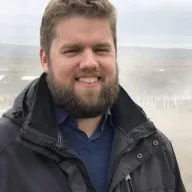
This is the actual fluency podcast, helping you become a better language learner by providing motivating weekly inspiration, as well as top tips and tricks from expert guests. And now, your host, Kris Broholm. Hello everyone, and welcome to another episode of the Actual Fluency podcast. This is your host, Kris Broholm. And today, I'm excited to bring you one of the last episodes of 2015. And this is a two-part with Richard Benton, who I met in New York City for the Polyglot Conference. And we talked for over two hours, so I had to cut it up into two episodes just to, uh, you know, make it a little easy for you when you're listening to this. I know, uh, my personal focus is definitely not two hours, uh, long. So, you're going to be getting the first part this week, and then I will send out the last part next week.
And Richard Benson is an extremely interesting person, and I'm really happy to have connected with him. I saw his talk in New York as well, as we get into in the interview. Um, he is really passionate about language learning in the local community, meaning instead of asking people who move to a country, like the cases with America, to learn English. Um, why don't the residents of the community learn the other languages? And that's what he's basically trying to do, uh, as well as a ton of other good stuff.
So, I'm really, I had such a great time recording this episode and it's funny that these two last episodes have been, you know, such monsters in terms of length. Uh, but I think that's what happens when you run into interesting people. You just, you just get completely, or at least I do, I get completely, um, baffled by the, uh, interesting nature of the conversation, so I don't, I don't want to terminate it, you know. I want to keep it going forever. And I know some people out there, some of you guys are probably going to be like, oh, this is way too long for me. I mean, you guys are just rambling. Uh, but I know at least some of you will appreciate, sort of, the, the reasoning behind it and, and the topics that we discuss, as they are very current and they are, um, you know, very good topics, I think. They're very inspirational.
And, uh, as somebody, when I was living in Denmark for instance, who never even considered to learn the top to learn the languages or even some in within the language of the, uh, immigrants of Denmark, you know, I just feel like this topic needs more attention. You know, uh, how much cooler would it have been if I'd learned some Arabic when I when I lived in in Denmark. There's a there's a large Arabic population, or Arabic speaking population, sorry. And, you know, how cool would it have been? But we get into this and a lot more. I don't want to take too long to, uh, here in the intro to talk about it, as it is a quite a long episode. But, uh, I hope you enjoy it anyway.
And, uh, just a heads up, if you haven't picked up my little ebook, I wrote recently, Polyglot Beginnings, uh, a guide on how to develop the right mindset for learning languages, and it also includes my complete story of how I went from depression to to new languages, so far. Hopefully, uh, working on some more, uh, Hungarian at the moment. It's really tough. But anyway, um, yeah, you can get that on actualfluency.com/beginnings, or just click the book in the right side bar. It's completely free, and when you download it, you also join my email club where I send weekly top tips and newsletters. So, you know, what's not to like? So, see you there and enjoy this interview with Richard Benton. Hello everyone, and welcome back to another episode of the Actual Fluency podcast. Today, I'm really excited to be joined by Dr. Richard Benton, who's a lover of languages and authors the Loving Language blog. He also speaks to audiences in the for-profit and educational sectors on the topic of language learning and diversity. Richard, how are you doing today?
I'm doing great. I'm doing great. Thanks.
Fantastic. So, a lover of languages like, uh, like many others. Uh, how did you get into language learning in the first place?
So, I got started with languages relatively early. I was starting in middle school, so around like sixth or seventh grade, I had a friend who was studying French, and he knew this stuff that I couldn't stand not knowing also. So, I got involved studying French then, and I liked French, um, fine, I did well. I did well in school in general, so it wasn't so hard to get into French well, but then over a summer, uh, in about ninth, eighth grade, I went to ninth grade. I went to, uh, I went away for the summer and took an intensive German class. And I've just recently realized how much of a turning point that was for me to really get me hooked.
I had a a professor, so it was a professor even though I was like 14 years old or 13 years old, and, um, it was a three week intensive German class, and we spent the first week on pronunciation.
Wow.
And it was, and we had to just do the alphabet over and over and over again. And it was, yeah, hours a day and everything. And he was all about speaking and pronouncing. And I just loved it. I had such a good time. And this, um, this place that I went to for intensive German, they actually had all different kinds of classes in all different areas, and at the end, they would have like a talent show. And every year his class would perform, uh, a poem in German but acted out, so everyone could understand. And so, we did the Erlkonig by Goethe. And so, we had to memorize. So, we memorized Goethe. So, by the end of three weeks, I knew Goethe, and I memorized Goethe, but we had to pronounce it, and we had to say it, and not just say it. We had to act it out in front of a group. And it was such a fantastic way to have to speak your language even if you're not conversational. Get up on stage in front of hundreds of people and start speaking. And, um, I still remember the and I still remember the poem and everything. So, that really got me hooked.
So, then I went back to high school, and I was doing French, and I was doing German. And then I started doing, um, anything I could. Uh, my German teacher was from the Netherlands. So, I approached her and I said, "Hey, I want you to teach me Dutch." And so, I would go over to her house for lunch. She retired, and so, I went to her house once a week for Dutch, and then I started taking Russian in an adult education evening class. I took Italian in an evening class. Uh, then I started taking Russian at school. Um, I and then, like, at the point that I could then my senior year in high school, uh, my last year in high school, I was an exchange student to France, and there was no looking back. Then I was looking at colleges, and I was just looking at what are your, what languages do you teach at your university, and where are your study abroad programs? And that will decide what I do from now on. And so, I went to college. I was a linguistics major. I had taken at the same place where I had taken German, I had taken an intro to linguistics class, um, and so, yeah, so, already by by 18, there was like, I was the language guy. There was, you know, no turning back. At this point, I remember too, um, this was in the, this is still in the '80s, and so, I remember learning Russian, uh, you know, often times I hear on the podcast people talking about the the sources and the the apps they use and stuff like that. I remember going to the bookstore, and you could get a a month old Pravda newspaper for five dollars.
Oh my God.
And that was your, and that was your monthly, you know, and I I would see that same brown newspaper there weeks after weeks, because it took a month for another one to come in. And, uh, so, um, that's how we, uh, that's how I, uh, um, got started doing languages, and just that's what I've been doing ever since.
Fantastic. But, I mean, five dollars is a lot of money in the '80s, isn't it? I mean, that's, that's might be cheaper than Rosetta Stone today. I don't know.
Mhm.
But anyway, that's a, it's a fantastic story, and I, I love how you just got obsessed, and you just wanted more and more. And, and do you think that's, do you think that's common with the language learning that it kind of opens up the, the proverbial, you know, uh, not can of worms, but the Alice in Wonderland story of the the rabbit hole, it opens up a whole new world.
I love the image of the rabbit hole. Yeah, I totally I've I chase that white rabbit, and I was down the hole, and I was in Wonderland. I mean, it was it it was a world, I like the I like the metaphor a lot, Kris. It's like, it's in a world where nothing really makes sense to anybody, and you're just trying to make sense of what's going on around you. You know, everyone everyone is speaking nonsense around you, and you have to just listen and ask questions and try to figure out what is this nonsense and is there some way of making sense of it? Is everyone just crazy? Or can we make sense of this somehow? And that's what it was. And then, you know, I just every time I'm like, what's going on there, what's going on there?
When I was in France, um, I was in, uh, um, there was a a week of, um, kind of acculturation camp outside of Paris before we went to our host families. And, um, you know, I made good friends with a couple Norwegian guys, and I'm like, oh, I got to I got to learn Norwegian now. I got to find out how I'm going to learn Norwegian, you know. And, uh, and I would learn, you know, a couple words here and there, but I like got myself a book. I mean, already when I was in when I was in high school, my family took a trip to Europe, and I was in the UK. It was a lot easier to get language books in the UK than it was to get in the US. This is pre-Amazon, you know.
Yeah.
And I came home with a duffel bag just of language books that I collected throughout Europe. And, um, you know, and I I was, you know, 16, and like, in my mind, I'm like, at least I'll have now you kind of see what's what's, uh, what came of that. A lot of my language books behind me. So, yeah, that's what happens. You just like, one comes to another, comes to another, comes to another, and now it's not enough. It's like, I meet somebody, I'm like, oh, you speak that language. What other languages do you speak? You know, I meet someone from India or from East Africa or something. I'm like, oh, what language do you speak? They'll say, "Amharic or Hindi or something." I'm like, what else do you speak? Tell me how to say something in all the languages you know. And I, yeah, that's how it keeps going. One just one just falls on the other.
Yeah, it's funny, uh, particularly in Europe. If, if, uh, you ask someone, uh, what languages do you speak, and they happen to say one you don't speak, you're always like, well, what else? Because we're in Europe, you know, there must be something else.
Yeah, I know. And we have an exchange student staying with us now, um, from the Basque country. And I'm like, Now I have to speak Basque. I just that's my fate.
Right. Yeah, well, I mean, I find it one of the most natural ways to learn languages is just what are you in contact with? And we'll we'll talk, talk about that in a moment. But, do you think that the lack of resources for learning actually could be could be beneficial in a way? Because right now, we're so spoiled for choice. It seems like there's a lot of, you know, selection problems going on where constantly you're evaluating, is this even working? Am I doing the right thing? Should I try Pimsleur or Rosetta Stone? Or should I use Duolingo? Should I use this, this and this? Or should I use these one of these? I mean, if you type in like, learn Russian books on Amazon, you will probably get like hundreds of replies. And it's Right. It's so hard to choose. Uh, what do you think there are some benefits in just having a simple immersion method where you just pick up, let's say, the newspaper, and you just you just have to learn it. There's no kind of beating around the bush with it.
That's an interesting point. I hadn't thought of it, uh, because I didn't grow up learning languages in the digital digital atmosphere. You know, I didn't I was in meat space. I wasn't in cyberspace learning languages, you know. Italki, you can meet someone who speaks every language and have them teach you their language. I mean, if I had that, I think I would have been in the same position like, which one do I choose? I mean, it I remember I wanted to learn a little bit of Swedish. And I when I was in high school, I went to the library, and they had like the only thing they had was like a record of like Berlitz of Swedish phrases. Like that was it. So, yeah, you don't decide like, is this the best method for learning Swedish? Like, well, I just, uh, the only, you know, I recorded it onto a cassette so I could listen to it on my Walkman. Like that's the only, that's the only different medium I had, you know. So, I think probably it is a little bit difficult. I mean, my attitude has been like, just take something and just just use the heck out of it. Don't wonder if it's giving you great results, because with language learning, I mean, once you get started doing doing, once you get started doing one method, um, it takes a long time to really see fruit. So, trying to decide like, okay, has this week proven this method or not, you know, you're not going to know.
And then the other thing is that as as long as you're getting input, and as long as you're trying to speak a little bit, like, that's pretty much it. I mean, when I learned German in this intensive course, the textbook I had was my was my professor's. It was like 12 pages long. Like, it was just like, here the conjugations, stuff like that. He's like, "Yeah, we're not going to mess with grammar. Let's just keep talking." And then we had a graded reader that we'd use sometimes, but mostly he was just trying to get us to just speak and memorize and, you know, things like that.
Yes.
But then there are other languages where, you know, you don't have so many resources. So, you know, in learning Somali, which I've been doing now for for a while, there's not a lot of resources. It's like two books. And so, um, you know, I don't I don't run into that, uh, uh, embarrassment of riches.
Right. Well, you know what to write when you've, uh, mastered the language then. You can write, uh, Benton on Somali.
I've got, I've got some I've got some things here and there. Like I've got some scraps of some things on my on my blog and stuff just for resources. I just realized there's not a lot of resources, and trying to find them's kind of a hassle. So, I just, as I find new resources, I put them on the blog just so people can have it. Um, and so, yeah, it's there, and it's been handy for people. Even it's funny. There's a huge diaspora Somali community, and so a lot of young people who grew up hearing Somali but don't speak it so great, who now are enthusiastic about learning. So, those kinds of resources are really helpful for those Somali kids who are trying to learn Somali.
Right. You hear that a lot, the the in in, I guess, all all countries where there's a a new generation, um, after immigrants or, I guess, it's later generations, too. I I've seen it a lot with the, I think it was when I was living in London, I saw it a lot with the Chinese population where they would understand their parents or their family, but they couldn't speak it. So, they would reply in English instead, which is an extremely interesting situation, really. Uh, but I guess that's the same, the you're talking about.
Mhm.
That they're just listening. They're just listening, so they they understand it intuitively, but they don't they can't reply because they haven't had that they haven't used it. I guess, is the whole point we're coming to. You need to use the language to be able to, uh, to to speak it. Um, so, yeah, I don't
Right. And I just I just
Go ahead.
Yeah, I've seen recently a couple stories in the US of, um, Chinese Americans who some of them, who's they, uh, they've spent time away from a parent or another one or the other parent for an extended period and end up not being able to speak with their parent. Or, um, uh, with Filipinos, that happens in the US, too. I think, uh, Filipino Tagalog is like, is one of the major languages in the US. Um, and, uh, so there's a huge population. It's the third most widely spoken language in California, for example. Um, it's, uh, but there's a big population of kids who can't speak to their grandparents.
Right. At least, but at least that answers the question, what language should I learn? If you're if you're sitting there, if you're listening to the podcast and you're Filipino heritage and you don't speak the language, and you want to speak to your grandmother, there's your first language to learn, I'd say.
I, you know, and that's the thing. I I Yeah, I think, and you mentioned that, Kris, like, um, what languages do you have access to? You know, and I think that that's a that's a big deal. And, uh, learning heritage languages, I think is really important. Um, and that's, and learning the languages, learning the languages around you. I mean, that's that's that's my that's my big thing recently is, what languages are you hearing? You want to know what language to to speak, listen. What are you hearing? And in the US, we have a lot of people learning Spanish, and it makes a lot of sense because you can speak Spanish all the time. I mean, you can live your life in Spanish. Even I mean, live in Minnesota. You can live in even in Minnesota with speaking, you know, 90% Spanish if you want. Um, so, what are you hearing around you? What and and that's a good thing to just start on learning.
Right. So, how, we were talking just about how you were learning, uh, back in the day, uh, without all these fancy digital tools and apps and softwares and new fancy books and, uh, have you have you adopted any of these fancy new techniques for your ongoing language learning? Or are you are you staying a traditionalist on that area?
No, I I I like, um, Anki is my, is like my go-to. And, uh, so Anki flash cards is my go-to. Um, you know, that's my my morning routine is I do Anki. And, um, sometimes that's all I got time for, but I'll always make time for that every day. Um, if I see, you know, if I see my stats, and I see one of the bars is missing, I'm like, oh, I missed that day. And, um, so that's my go-to. And you know, that might, and that's not a huge amount of time, you know, I'll spend, uh, you know, as little as, you know, 10 minutes, even less some days, you know, but just go through my cards. Um, I've started using, um, Memrise just recently in the past few weeks, and I like it, um, because of the different methods and it's it's, you know, it does a lot of the thinking for you. I mean, with Anki, the hardest part after a while is find new words, and getting new words, and I haven't been spending the time doing my reading in Somali, which I should, to get more words or going out in the community and getting some new words and that sort of thing. Um, actually now that I think about it, I've got a few words I could be adding, but, um, you know, working on, you know, working on that sort of thing. So, I like I like that as an app, Anki, Memrise. Um, yeah, but, uh, uh, other than that, I, um, you know, I just try to collect collect information. That's the other thing is is there's the one for practicing language. There's the other for, um, collecting information when there's not a lot out there. So, I try to use I'm trying to use more and more technology, more and more resources to try to, uh, expand what I've got.
Awesome, awesome. And, uh, you touched on an interesting point there with the morning routine because, uh, obviously, it's quite early right now, and I I was I questioned that a few minutes ago, and you you said you were an early riser. So, how do you think that, uh, is beneficial to language learning?
So, you know, it it's actually it's actually really helpful for me. If I'm just trying to if I'm trying to memorize stuff and go through my cards, I see a huge difference if I do it in the morning. Some Some mornings I'm super busy. I don't have to, you know, or I've got an early meeting or something like that. And I have to, uh, do my do my cards, you know, over lunch or something like that. Um, and it's not it doesn't go as fast. I make more mistakes. Um, it doesn't come as quickly. Now, maybe it's just because my brain doesn't think it's card time. You know, it's not Anki time. What are you trying to do to me? Or is it because it's just, you know, it's not the morning. But, I think doing it first thing in the morning has been really helpful for me. My, um, for memorizing and for focusing. I'm not someone who focuses easily. And so, for focusing, first thing in the morning is the best. Get a cup of coffee, and get my Anki, and I'm ready to go.
Wow. Yeah, I I had sort of a similar experience. I'll, um, I'm happy to hear you you feel the same, because it I think it's this old, um, people keep telling me that discipline is like, um, an elastic band. Like, you can pull it all day with various little things that you have to do, but eventually, it's just going to snap. And, you know, the elastic band works best when you just start pulling it, because that's when you got the most amount of discipline. So, um, yeah, so another tip for people who say they don't have time to learn languages, you know, get up half an hour earlier and and do some stuff there. I I I am definitely one of the worst at getting up in the morning. Um, but when I do it, it's a huge difference in productivity. Also, because you start your day with a win, right? So, your entire day is just carried by that, uh, positive change.
And it gets me it gets me kind of warmed up in the morning. If I bump into a Somali and I've done my cards in the morning, it's easier than if I bump into a Somali and I haven't done my cards in the morning. You know, it's that it's that, you know, when I travel sometimes it's hard. Um, but and, you know, but I'm out and about, and, uh, you know, in a lot of places I've been there've been a lot of Somali cab drivers around, uh, I've noticed even in, uh, in airports here for some reason. That's where I see a lot. And, uh, so, you know, in Phoenix, in San Diego, I've bumped into Somalis, and I better be better be ready to go with my with my Somali, you know. I want to I want to be warmed up and ready to go if possible.
Right. And, um, have you ever have you ever like learned a new sentence or a new phrase from your cards and then met someone right after and then panicked and didn't use any of it?
Ouch. You hit close to home there, my friend. It's, uh, all the time, all the time. I, um, I can even remember a specific instance. I was just trying to say like, I was born this was horrible. I learned how to say I was born in Somali. And, um, I was at a a work picnic. And there was the, and there were these a couple Somali young Somalis, uh, who were interns. And my boss says, "Oh, Richard, he knows Somali. He's awesome. You should talk to him." And they asked me where I was from. I'm like, I don't know. And I was like, I said, "I don't know," in Somali.
Wow. It was a good start.
So, then I went home, and I'm like, that, I'm not I'm never going to do that again. So, then I went home, and I and I learned it, you know. But, you know, it's like terrorism. You're always fighting you're always fighting the last attack.
Yeah. No, definitely. Definitely. But, you know, that's the thing about just repeating it and repeating it, and, um, you know, it's funny because I joke that there's like, I mean, I love Benny's, uh, uh, line of make 100 mistakes a day. I mean, that's that's my favorite. Um, and the other thing is just like, I've asked several people, you know, that I bump into, how do you say this the same thing? You know, it's like, um, one of the things I've had to memorize is, um, why are you learning Somali? Because that because that comes up in every conversation when I start speaking Somali to somebody. And so, I'm like, you know, I don't even know exactly how they're asking, I know they're asking it by now. But, I can't say exactly. So, then the next time I bumped into somebody, I said, uh, okay, uh, what do you, um, how do you say this again? And then I like wrote it down and everything. And I'm trying to use more technology. I got a, uh, uh, a Samsung Note so I can like scribble down notes where I'm where I'm wherever I'm going. Um, I'm trying to do more audio. I did, uh, I was asking a question of somebody recently, and I that I did a a post on my blog, uh, a proverb in, uh, Somali. And so, I recorded, um, I recorded the audio. That was just someone walking down the street, same street I was. I'm like, what is this, hey, I just saw this thing. And I I took a photo of the of a of a of a poster that was in Somali. And then I like, hey, can you help me understand this? And then he helped me understand it. And then I'm like, and it was a kind of a translation of an English proverb. Um, and I was like, is there a better Somali proverb for that? And then he told me. I'm like, okay, now I want to record that, so we have it. You know, so, anyway, it's it's good to use all those different technologies.
But, you know, it's, um, the great thing I've found is that it just, it's a great way of starting conversations with people around. I mean, for people, here's the thing I think is really helpful for people who are more introverted, people who are more, um, intimidated about just going up and and and asking and and talking to somebody. Um, I think the best thing you can do, actually, is rather than go up and, quote, talk to somebody, unquote, have two questions ready. I ran into this thing in my language, and I don't get it. And, um, and then just go up and say, "Excuse me." You know, learn how to say, do you speak such and such a language. Say that, and then you can say in English, "Hey, can you help me with this thing?" Just this I have this one question. It would be really helpful if you could help me with that. So, just have one to two questions you're already ready for, and then all of a sudden you can get into, uh, um, you can get into a discussion.
I mean, this really started for me kind of recently. And, um, I was giving a talk at a local, um, it's a network of Minnesota, uh, NGOs. And I was talking about how, you know, people working for NGOs, you're in contact with people all the time who speak other languages. Are you taking the opportunity to learn their language? You know, you and, you know, because they're traveling, they're they're speaking online to people, are you making the effort? And I told these people from the NGO perspective, I said, "Hey, now, let me just ask you this. You're dealing with people who you're helping. The reason why you're helping them is because, uh, they're in bad, um, social situation, even physical situation. They don't have a lot of resources. Their time is spent just on survival, and you're trying to help them. Why would you wait for them to learn English?"
Yeah.
You've got all the resources. You've got all the time. You've got, you know, the internet. You've got everything you need to learn that language, and you're making them get the education?
That was that was my talk. And, um, so then I get out of there, and it just happens to be at the University of Minnesota, which is right like across the street from the biggest concentration of Somalis in the Twin Cities.
Wow.
Minneapolis, St. Paul. So, I come out, and I'm like running into people. I'm like, all right, Rich, time for the rubber to hit the road. And, uh, so I'm like, I got to learn something. I got to figure out something. So, I went to the the light rail stop, and I just kind of was walking up and down the the the the platform looking for some idle looking Somali who looked like he didn't have anything better to do than talk to me. And, uh, and I just went up, and I said, "Hey," I said, uh, "Somali, do you speak Somali?" And he kind of gave me a funny look naturally. And, uh, which I'm very used to. And, uh, so we started speaking, and I was taking the the train to the airport, and he worked at the airport. So, we were on for the whole time together, and I was writing stuff down. And he said, "Hey, no, no, don't write it like that. Write it like this." And he was like correcting me and stuff like, "No, no, that's not right." And he was giving me different variations and stuff like that. And this is just a simple airport worker, you know. He's not a professor.
Right.
And, you know, if we have the right attitude, and I say this in all my talks. If we have the right attitude, um, we see that we're surrounded by teachers. And if we take the attitude that we're surrounded by teachers, I mean, look, you know, you're in Budapest. I mean, walk outside the door, and it's like, PhDs walking up and down the road, you know, from five years old up. They're PhDs in Hungarian.
Yeah.
It's just a matter of which one are you going to, which one are you going to grab to teach you for the day, you know? Exactly. And that's really what we can be doing in any city. Amazingly, you know, it's maybe harder to find, but there are people who know a lot of stuff. Um, the the story of, um, the the, I forget his name now. He does the, um, Endangered Language Project in, uh, in New York City. And he spoke at the the Polyglot Conference also. He had a great story where he was trying to learn about, uh, these Central American indigenous languages. And so, he went to a Mexican restaurant, and he just said, "Hey, you know, to the waiter, something like, hey, do you happen to know anyone who speaks one of these indigenous languages?" And he said, "Yeah, I do." Yeah. He's You know, if either I'm super, super lucky, or there's tons of these languages that are being spoken, and we have no idea. And that was an inspiration to me. I'm like, what's going on under the surface? There are people who speak languages who won't even admit it. Meet a every time you meet a Chinese person, I ask, I'll ask you to do this. Ask a Chinese person, how many languages do you speak? More than likely, they speak they speak Mandarin, but then they also speak one or even two local languages. Right. So, you're dealing with someone who's fluent in like three languages, take your pick. Right. You know.
Yeah. It's extremely interesting. I think one thing I'd like to also add to that is, um, that's why it's very helpful at the beginning to learn, how do you say, and what does X mean in the foreign language? Because I feel like I can have a conversation completely in Hungarian with like, maybe I know 100 words or a few hundred words at most, just by knowing how to ask what a certain word means or what a how to say a word. So, those two give you so much mileage, you know. If you go up to someone and say, how do you say the grass is greener on the other side in Hungarian, or whatever. Yeah. You know, um, so that that's just my comment. And I I just recently started doing this, uh, I almost call it like language hunting. Um, where let's say, let's forget that I'm studying Hungarian. Let's, uh, go for the Russian that I'm also studying. If I had to go find Russian speakers here in Budapest, it wouldn't be impossible. I've I've heard it. But it would kind of be a hunt, you know, a little bit, um, I'd had to, uh, to hunt it a little bit. And that's also kind of funny. I was thinking about doing like a a YouTube series about that, just have someone film me as I go hunting for my languages in Budapest. Um, kind of language safari in a way. And then see what we can, uh, come up with. That could be that could be a lot of fun. But, uh, for you it's probably a little bit easier because you you know where the concentrations are, and and also, you know, it's easier to see if if somebody is from Somalia or the US, whereas, you know, Hungarian and Russian people can be very similarly looking. So, I could look for years and I probably, uh, passed by thousands of Russian people, and I wouldn't have any idea.
You know. What I used to, when I I was in grad school. My first time in grad school, I was in New York. And so, my buddy and I would go to Manhattan. And I I had a game. I called it Russian spotting. And, uh, and I would just I would like look I would just keep my eyes open, and I would look and look and see if I found a Russian. And then the way I would kind of cast my line, so to speak, I would say, "Zdrastvuyte. Dobryy den." Just to see what would happen. And if I got someone who like looks super surprised, then I'm like, okay, I got one. I was and I got pretty good at it after a while. Because, actually, one of the things is when you start doing that, you start realizing that you can identify them if you try. And, um, so that's been something I've been, uh, uh, like after doing Somali and stuff, I realized I can tell the difference between Somalis and Ethiopians. There's a lot of Ethiopians here in, uh, uh, in the Twin Cities. And I can tell the difference. And then I took a class in Oromo, which is the, um, the most the biggest, uh, ethnic group in, um, Ethiopia. And so, I just learned how to say a couple of phrases. But, I started noticing like some differences in how Oromo look from other Ethiopians. But, it's using the languages that really kind of got me into understanding and and looking for those differences. And, um, so and, and the thing is that I think Oromo is a good example of this, excuse me, because, you know, Oromo is a language that's not only no one has ever heard of it in the US, but it's a language that's, um, that's repressed in, uh, in Ethiopia. And, um, so there's some political there's some politics around it. And I don't want to get into the politics, but one thing that I've found is that, you know, just by speaking, you know, two words of that language, um, like people really, really appreciate it. And I realized that, you know, I'm, you know, my my my, you know, we've only lived in Minnesota for three years, but for anyone, you know, all these Somalis and Ethiopians who've been here for 15 years, um, we seem more Minnesotan than they are because simply, they're we're white, and we're native English speakers. Those two things make us more make us fit in more. So, I realized that from being in a position of, um, kind of power that way. Since I am white and I speak English natively, I have good education. I have a good family, uh, that I can draw from if I need help. I have so many advantages and things like that. Why not, like I told these people at the NGO Network, use my resources to help them feel more at home? How do I use my love of languages in order to, uh, connect with them, in order to help them feel better? You know.
One of my favorite stories was, um, my friend's dad. I I I grew up in Denver. And there's a lot of, uh, uh, Mexicans and and Central Americans in Denver. And my friend's dad spoke Spanish fluently. He he was not a native speaker, but he learned it in college and spent time in Spain and stuff. And he was a real estate appraiser. So, he would have to go to people's houses and knock on the door and, you know, go and measure their houses and stuff. And naturally, you know, people who are suspicious of the government or people who are not familiar with the the culture and stuff, they don't want to let some random person come in the house. He spoke fluent Spanish, so he would get in there, and he could do his business. He made friends with the people, and then he would leave. You know, it was a nice time. And one time at his church, there were some people who wanted to start up, uh, uh, something to help out immigrants. So, they decided, um, they were going to do, uh, um, English as a second language class for immigrants so they could learn English. And he said, "You know what, actually, those people, they prefer they prefer speaking Spanish. They're not that interested in English." So, if you really want to do something for them, then you get a teacher, and sit your butt in the chair, and you learn Spanish. And I really took this to heart, and said like, you know, I know English already. English is easy. These people have to struggle through English. Even if, I mean, I know some people who've been here 10 years, Somali people, you can barely hear their accent. They're really good. But, why not make the effort to say like, you know what, I'm going to put forth a tiny bit of the effort that you put forth in learning my language, so I can speak with you. I want to make you feel more welcome. Not only that, I want your children to see, like we were talking before, how do you encourage the kids? I want your small children to see like, look, your language is something that's not just isolated to your house. You know, your language is something that is worth not only speaking, if you know it, but even putting effort in to learn. And so, you know, a lot of what I think about outside of language learning is about power dynamics, and about how the powerful treat the the weak. And, um, I I used to, uh, be a professor of comparative religion, and so I saw this in a lot of different religions, and my my, uh, education and my interests are mainly in the Bible. But, I've looked at a lot of different religions when I was teaching at, uh, uh, different universities. And you just see this time and time again, is that human beings, um, misuse power, uh, you know, 100 100% of the time. You know, there's always some misuse of power. And if we're in a privileged position, how do we make the effort to help those who are in need, help those who are struggling? And I found since, hey, I've been a language guy since, you know, well we did the math since I was 12 years old or 13 years old, um, why not use that in a way that I can turn the power dynamic upside down? And rather be the guy with the power and the knowledge, be the guy who misspeaks, can't say where he was born, and is trying to figure out how to just, you know, get his way through, why are you speaking Somali? And, um, and in the, and in so doing, um, make someone feel more welcome. Make someone feel more at home. Make someone feel more visible. Make someone feel more respected. Why not do that?
Yeah, exactly. And I I I was very fast I went to your talk in New York. And I was very fascinated with the whole concept because and perhaps that shows the importance of the topic because even I, as a sort of, you know, aspiring polyglot, didn't really think so much about this community learning, um, when I was living in Denmark. Yeah, it did when I was thinking about what languages to learn, it did slightly cross my mind to think about, you know, what kind of populations do we have here in Denmark. Not exactly known for being super diverse, but we do have a quite a substantial, you know, immigration population. And guess what? There's tensions between, you know, the immigration and the population because I mean, it's some form of racism, obviously, but, you know, it's kind of, um, we don't really know the others very well. And I was just like, as you were talking now, I was just thinking, man, integration would be so much easier if like the, you know, the people who live there just took some time to learn the other language, because that also gives you the culture, and that brings people together over a common, you know, you can even split it up like, you know, of course you want to learn the language of the country you live in in most cases. But, you know, I'll learn your language as well, just to see where you're coming from and like, what kind of background do you have for learning Danish. And if more people spoke the language of the immigrants, I'm sure it would be a much nicer environment. Yeah. And I don't know how it is in the the US, but in Denmark, it's very like, they're very sort of concentrated in in one area, and you see a lot of immigrants in that area, but not so many, uh, you know, Danes. So, the problem is that you get these almost like a country within a country. And that's just a that's just a shame, isn't it?
It it it's, uh, it's a shame, but it can be a great opportunity, too, because, you know, I know that like, um, you know, when I know it's time like I because of family responsibilities and work responsibilities, I don't get to do it so much. But, you know, when I'm like I want to practice Somali, I know where I'm going. Right. Riverside. Cedar Riverside is where they're at. And I know, you know, there's a concentration of several blocks. We have a a Somali mall. I just have to show up at the Somali mall, and that's how many people I, you know, as many people as I can find, I got. So, in some ways, you know, for someone who, um, who thirsts for, um, adventure and practicing languages and stuff like that, I think for a lot of us, the uncharted territory are those neighborhoods. You know, go and like, when I have to go downtown for stuff, you know, sometimes these are poorer areas, the immigrant areas where people feel uncomfortable and stuff, I am so excited. I go. You know, I love going to those parts of town. Um, in, uh, in Denver, you go to Aurora, which is, you know, not a it's just kind of a suburb of, you know, not a lot of a lot of condos, and, you know, not really such a beautiful area, but cheap. And so, when for immigrants first come to Denver area, a lot of them go to Aurora. You can find so many different languages. Last time I was going through there and just East African and, um, East in East Indian, you know, Bengali and stuff you see. And, um, there's a back in the '90s, a lot of Russians. I don't think as many Russians live there anymore. Um, and you can see like, and I'm like, this is a bonanza rather than like, a bunch of ugly strip malls.
Yeah. Going on or just if you live, if you visit a big city like New York. If you go on the subway, I mean, there's a million different languages being spoken. I mean, there were several times I couldn't even identify the language or like what it was. Usually, I'm pretty good at at listening and guessing even though I don't know that many languages. But, I was just sometimes I'm like, I have no idea. And the same in in London, very diverse, lots of languages, and, um, but you can always find it, of course, if you look for it.
Yeah. No, I think that's really the I think that's really what what it is. And and, you know, put it this way, um, how often do you hear people speaking with an accent?
Yeah, often. Right.
Yeah, often. So, that's where you that's that's a great place to start and just saying like, what you know, hey, what what languages do you do you speak? And some people, I know, they they get sensitive. It's like, uh, I've lived here for I had a someone in my company. He's like, uh, I've lived here for 30 years, and people are still asking me where I'm from, you know? And, um, and so, he was a little bit exasperated. He was much higher on the hierarchy than me, too. So, probably a little bit dangerous for me. But, um, but I'm like, no, you you what I I said, you speak this, this and this language, right? Because I think I talked because I talked to another guy who said there's three people who come from this ethnic group in our company, and I think you're one of them, no? And, uh, so I probably going out on a limb there. But then he's like, oh, yeah. And, uh, and ends up, you know, he doesn't just speak one language. He's he came to the US speaking three languages. Of course. Yeah. So, and, and you recognize it. It's like, you put in a lot of work. You have a lot of knowledge. Why don't we acknowledge that? Why don't we we use that? Why don't we celebrate that? Why don't we as a polyglot, why don't we enjoy the heck out of it?
Yeah, I I definitely do right now with Hungarian. Just going down to the subway. Oh my God. I've got something in my throat, but hopefully I'll survive. Um, going down to the subway, and, you know, just ordering in Hungarian and having no idea how to say sub of the day, just asking, how do you say sub of the day? And it turns out Hungarian for sub of the day is a lot easier than the sub of the day in English. So, there you go. I mean, there's an example. In Hungarian you just say, Napi sandwich, which is Nap, nap is day, and the I at the end makes it like of and Napi sandwich. It's way easier than saying sandwich of the day or sub of the day. Um, and and they they just get huge smiles because it's a tourist area. So, they never used to any tourist taking any kind of, uh, effort to learn to learn Hungarian. So, it it's just funny. And you feel like you've conquered the world afterwards. I don't know where this comes from, but I just sat down. I was like, I can do anything now. I ordered my sandwich in Hungarian. I mean, what did you do today, you know?
Well, and I think that's great, Kris, that that you do that. And, you know, in an area where they don't expect you to or they're perfectly capable of speaking English to you, especially talking about the menu, you know, but to make that effort and to see like how it's appreciated. That's that's what I think. It's like, as language learners, um, we see time and time again how much our efforts are appreciated. If we make that kind of the motivation for what we do, um, you know, it's like, I want to figure out ways that I can, you know, who are the people who are most beat down around here and stuff like that? You know, I was I was teasing somebody because, uh, when they announced the next Polyglot Conference was going to be in Thessaloniki. You know, people are like, who's going to learn Greek? I kept saying like, I kept putting out there like, who's going to learn Arabic and Kurdish? You know? And because I had a I had such a fascinating experience when I was in Greece last summer. I was there on vacation before I knew the the Polyglot Conference was going to be in Greece next year.
You were there scouting it out. We know. We know.
That's right. They drew on my extensive knowledge. But, I took the train from, uh, from Athens to Thessaloniki, which I had taken back in the '90s last time I was in Greece. And now I find out that people who have any kind of money, they they fly because it's just like an hour flight, and you don't have to worry about strikes and weather conditions and that sort of thing. So, I just took the train by default, because that's what I thought that I would do. And so we and so it was mostly, you know, poorer people on the on the train. And sitting across from me, there was a a family. And they were talking to each other. And again, like what you were saying, it was a language I couldn't identify. I didn't know what it was. So, I thought is it Albanian maybe? Because, you know, especially Northern Greece, there's so many Albanians and stuff. And I'm like, what is this? So, I turned to the young man, and I said, uh, uh, do you speak English? Because I'd heard the the snack cart lady was speaking to him in English. I'm like, oh, do you speak English? And he said, he he shook his head no and pointed to his the young woman sitting next to him. And, uh, and I said, what language were you speaking? And he said, uh, Turkish. Uh, sorry, Kurdish. And, uh, and I said, oh, Kurdish. And I said, uh, do you speak Arabic? And he said, oh, yes. They were Syrian refugees, um, from, uh, um, uh, where are they from? Kobani. And which is right on the border of, uh, Syria and Turkey. And so, we started talking, and and we were speaking in Arabic. And, um, you know, I was able to understand a lot about what was going on. Made that personal connection. You know, it's beyond the headlines. You know, here's a family. It's a guy and his aunt and his uncle and his cousin who are traveling together. Um, and so, I'm able to say hello to his uncle, who's an elderly guy. These people have been through so much. I mean, saw this young woman, and she looked like she's probably 19 going on 40. I mean, she looked like young and old at the same time. And it was a five hour train ride, and she looked completely exhausted, and didn't sleep the entire time. And it was so heavy to see. You know, because this was before the I mean, this was back in, uh, um, June before a lot of that, you know, the before the waves of the immigrants coming across the Mediterranean really hit the news. And it was so touching to hear the story of what this family had been through. And his wife and kids were in Turkey. His parents stayed back in Syria to protect the the the home but they left because the PKK and the and and ISIS were, you know, potentially coming to a head there. So, they wanted to get out before there was fighting. Yeah. But, you know, where he worked and stuff. I had been to Syria. So, we knew a couple places in Koba. He's like, oh, yeah, I used to work there. He's like, the Kurds and the Christians, we got along so well. Um, you know, it's such a pity now things that are going on. And then afterwards, I turned to my daughter who was with me. She's, uh, 13. And I said, see the importance of learning languages. You know, you get to have these kinds of conversations. And she said to me, "Yes, Dad, I'll never travel anywhere without you." I'm like, "No! That's not the point. You learn the languages." So, um, but, uh, so, you know, in going to Greece, what are we what conversations do we want to hear? What conversations do we want to have? Uh, what do we want to be listening to? Who do we want to be connecting with? And once you make once you ask that question, the next language then becomes, uh, clearer. But, we can all as language learners be conscious. Who do I want to connect with? Do I want to use my power for, uh, uh, for helping those who are weaker? And this whole power dynamic, it's something that's that's very near and dear to me, and I I have my my, uh, you and I talked about it, you know, I have my podcast that I do on the Bible, which is not a religious podcast. It's really trying to talk about the Bible itself as as literature. It's called The Bible as Literature. But, really what my friend and I are trying to explore there is how do we have these ancient do we have this ancient literature that's commenting on power dynamics within our society? So, that's why it's near and dear to me. But, as someone who's, you know, a congenital, uh, language learner, how do I incorporate how do I incorporate my understanding of these power dynamics with my love of languages? And that's really what I try to bring.
Right. I find it very cool though that the whole, um, that you know, the learn Greek, even though it's kind of a a dominant language anyway, but I find it really cool that after the conference, it's like, okay, let's learn the language from where we're going. I thought that was a a pretty good idea and and touch. Personally, I won't be, uh, I won't be doing it, uh, because I don't I have other languages to learn right now. But, it's just very fascinating to see, and I guess people are really obsessed. To put it mildly, uh, in a good way, um, but you have all these people where, you know, they if they see we're going to Greece, it's like, okay, they're going to go pick up the teach yourself or the colloquial, you know, just get going on on the Greek. But, obviously, a big language, so it it does make sense to, uh, and to get to it.
Wow. Thank you so much for listening all the way to the end here of this, uh, long episode with Richard Benton. I really hope you enjoyed this first part. And, uh, stay tuned for the next one coming, uh, to you next week. And if you're listening to this in the future, later than December 2015, the second episode is already up, look for season 3, episode 10. And, uh, enjoy the rest of this conversation. Take care. Thank you for listening to the Actual Fluency podcast.