Gavan Fantom: Native Esperanto speaker
Kris Broholm interviews Gavan Fantom, a native Esperanto speaker. They explore Gavan's unique upbringing, speaking Esperanto as his first language. The discussion also covers the language itself and the Esperanto community.
June 20, 2014 · 52 min
EP 16: Gavan Fantom: Native Esperanto speaker
0:00 / 51:59
Guest
Gavan Fantom
What You'll Hear
- 1 Kris's changed view on Esperanto ▶ 0:00
- 2 Guest's exciting Polyglot Gathering experiences ▶ 7:00
- 3 What is Esperanto? Its unique history ▶ 11:30
- 4 Why Esperanto is easier to learn ▶ 16:00
- 5 Raising children speaking native Esperanto ▶ 22:30
- 6 Esperanto grammar benefits and community vibe ▶ 34:00
- 7 Why learn Esperanto? It's easier! ▶ 44:30
Links Mentioned
Questions Covered in the Show
What is Esperanto?- 11m
Why was Esperanto created?- 13m
How is Esperanto designed to be a second language?- 15m
What was it like growing up as a native Esperanto speaker?- 20m
Does learning Esperanto grammar help with other languages?- 29m
What is the Esperanto community like?- 35m
Related Episodes
See all →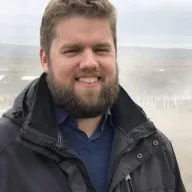
On this episode of the Actual Fluency Podcast, I'm joined by native speaker Esperanto, Gavin Fenton, to talk about the language and also how he was brought up speaking it as a first language.
Welcome to the Actual Fluency Podcast, the podcast that gives you the tools and inspiration to learn languages faster and more efficiently. And now your host, Kris Broholm.
Hello, hello, hello everyone and welcome to another episode of the Actual Fluency Podcast. This is episode 16 and I'm your host Kris Broholm. And I wanna immediately thank everyone for taking part at the Polyglot Berlin Gathering or the Polyglot Gathering Berlin, however you wanna say it. I just came back last night and it was a great pleasure to see so many people in real life, so many amazing language learners and also people I've talked to on the Facebook and on the YouTube and everywhere. Some of you might be listening to this right now. If you are and if you were in Berlin, I wanna personally thank you for coming out and also say hi if we talked or anything. It was really a great event for me and it was really quite amazing to have people come up to me and say, "Oh yeah, I listen to your podcast. I read your blog." You know, it really is a nice feeling to get that. So if you're out there, you're listening, don't hesitate to send me a comment or leave a review on iTunes or anything that you feel like doing. It really does help and I appreciate every single one of them.
At the conference, I was fortunate enough to persuade, I don't know, I was fortunate enough but I was fortunate enough that many people accepted my invitation to come and sit down with me for half to a whole hour and talk about language learning and languages in general. So over the next coming months, uh, weeks, you're gonna hear some of these interviews from Berlin and they're gonna be with people that you've definitely heard about. I'm not gonna spoil any of the surprises, but it starts today with Mr. Gavin Fenton and what's interesting about Gavin is that he's a native speaker Esperanto, meaning that he was, he was brought up Esperanto as his first language. And therefore he is probably the best chosen to talk about Esperanto and the reason I'm talking about Esperanto is because during my stay in Polyglot Gathering Berlin, my kind of impression of Esperanto has greatly changed because and and I talk about about this with Gavin in in the interview segment but basically the the whole idea is that if you're looking at it from the outside and you don't know anything about it, it quickly looks like, you know, a bit of a secret club and people are hanging out around their own language. But after having met a lot of these great people and talked to learners of Esperanto as well, somebody like Benny Lewis's girlfriend Lauren, having talked to her about her Esperanto project and seeing how far she's come in six weeks and kind of hearing her feelings on how the community embraced her, really kind of leads me to believe that the preconceptions I had about Esperanto were mostly erroneous.
So what I've decided is that I'll get into Esperanto. I don't know when or how but I would go on to Fluent3months.com and check out Lauren's, you know, videos on the matter because she's doing it or has done it and I'm sure that if, if it works for her, it could work for me too. So I'm excited about that and I'm excited to bring you an Esperanto episode. And if you're an Esperantist out there listening, um, what whatever that word kind of implies, we do talk about it in in the video as well in the in the audio. But basically an Esperantist, I'm assuming, is somebody who speaks Esperanto and but still some people decide decides not to go by that title. So but anyway, if you are an Esperanto speaker out there listening to this, I wanna say, well, thank, first of all, thank you for listening. And second of all, I wanna apologize if I make any grave mistakes in the interview segment based on ignorance because uh it's very easy to have, as I mentioned, preconceptions about a language or indeed a community. And so some of the questions I'm asking Gavin might seem a little critical of the whole movement. But don't worry about it. It's only, you know, in in order to kind of provoke a good response from Gavin and and he was a good sport about everything. So I don't think I overstepped any boundaries but at times I I did bring out some kind of common well-known criticism.
The last part I wanna just briefly touch on is that the interviews were recorded in the hotel room. And of course, the hotel rooms in a little German cheap hostel are of course not soundproof and I was unable to find any really good places to record. So if you feel like there's a bit of a roominess to it or a bit of a noise that isn't usually present in the podcast recordings, then I do apologize for that but that is the kind of the sacrifice we have to make of our ears when we are doing sort of live recordings. These were recorded live in Berlin in the last week or so. And so, you know, the the audio quality is as good as I can make it with my measly editing skills and I did attempt to make it as good as possible. So I hope you'll enjoy the interview today with with Gavin Fenton and the coming weeks with other great polyglots.
If you have any questions or comments, as per usual, feel free to leave a comment anywhere, I'm sure I'll see it YouTube, the blog, uh, Twitter, Facebook, wherever you like, even using the contact page on the actualfluency.com website and I will get back to you as soon as possible. Thank you for listening and thank you for being amazing at the Polyglot Gathering in Berlin, if you were there. I can't wait for the next one. So here is the interview with Gavin Fenton about Esperanto.
I'm joined today with Gavin. Gavin Fentom is that how you say it?
Gavin Fentom.
Fentom, okay. So maybe you anglicize it a little.
Yeah.
So cool name. And um I've I've brought Gavin here to talk about Esperanto. And um I know that a lot of people might not have heard of it or maybe you've heard of it but don't really know what it means. Um so we'll get into that. But first I just wanna ask you how you're feeling about the conference so far? Are you enjoying it? Hanging out and
I'm absolutely loving it so far. Um I've I've almost had enough sleep but it's getting difficult with so many interesting things to go to. Right.
I've had absolutely amazing and somewhat overwhelming experiences with all the different languages going on at the same time. It's it's tiring but it's really good.
Yeah. And of course you're sleeping in a new bed and stuff. I I definitely had trouble sleeping so when you have to it's like mentally draining, isn't it? It's not physical. You're not physically tired but it's like oh my head is tired you know. It feels that way.
Ah it's long enough day has just gone.
Yeah completely gone. That's great. And um of course we're talking about Esperanto today. Did you have any other languages that you were went around and and talked a little bit in or mostly that you were focusing on?
Yeah sure. I mean when I arrived, you know, I was just putting my stuff down on my bed and I somebody came in and talked to me in German and um and and when we reached the limits of my German, um we switched to Esperanto and when we reached the limits of his Esperanto we switched to Serbian. So when we reached the limit of that we eventually discovered that we both more or less natively speak English. So
Oh yeah. That was pretty cool.
Yes.
That is the real what one of the eye openers for me is that you can have two people from the same country who will speak perfect English, this is an example, but you speak other languages almost like you didn't even care about English. It's like I I find that experience great.
Yeah.
Yeah and and I do it all the time with uh with someone with some of my friends now Chris who also lives in in the studio. Um we talk of course we have English both of us but when we speak another language, it's almost like there's something going on. I can't really explain it. It's pretty cool. And some of you see it these events I guess.
It's nice when you have a choice, isn't it?
Yes. Fantastic. Yeah I mean some people have like 10, 12 fluent languages here which is insane I feel like. Yeah. Like I mean I need to get them in the studio and and grill their heads about this because it's just unbelievable. I mean it takes time of course. Time's probably the most important factor but just to be able to juggle between 10 different languages just like casually turning around and then just switch to Portuguese and you go to whatever, you know.
Well I was in a talk before lunch. Um it's absolutely inspirational. I mean the guy was there just talking, he was telling the story of his like travels and and languages that he was learning and every three or four sentences, often halfway through a sentence, he'd just switch to another language.
Wow.
And I just completely lost count of which languages he was speaking.
Yeah, he's really incredible. I haven't actually talked that much to him but I I wanna do it. I wanna get him in the studio. I wanna get everyone in the studio. Yeah. But but Gavin of course you are known by the people around here and that was also your talk was Esperanto. And if we were we were talking about what to talk about today and and we had had probably had to start with what is it anyway? What's the the kind of the cliff notes on the history and the story behind and and and how did it become kind of a big thing? I mean it is a big thing around here. Definitely here in this community but also around the world it's growing and growing. So so what is it Esperanto?
So Esperanto is a um, we have different categorizations, a conlang constructed language, an international language, an artificial language, an auxiliary language, whatever you want to call it. Um it's been around for a while actually. Yeah. Um it was originally published uh back in 1887. Right. So it's had a while um to you know, mature a little bit. I mean it's not a very long time on the time scale of language evolution. Sure, sure. But it's long enough to have several generations of of people speaking it to have moved with the times, acquired new words and really to grow community. Right.
So what was the original kind of philosophy behind because obviously we have I I think the latest estimate is about 6,000 languages to choose from. So why did this person decide that's not quite good enough. We need something new. What was the reasoning? Do you know any of this?
So um, yeah, so Zamenhof who created the language. Um he was living in an area which let's say was not particularly stable. Right. Um there were a number of different populations who had different languages who had frictions. Quite significant frictions. Um and his idealism was that maybe his contribution to solving this and to, you know, in in a grand sort of sense, achieving world peace. Yeah. Was that if each of these people, you know, if they could speak a common language.
Right.
If they could talk to each other, if they could communicate, they might start, you know, buying each other beers or something rather than killing each other.
Um.
So that was the philosophy to bring people together?
It was, yeah. And there's, you know, a lot of the um the the construction of the language is is designed with this idea in mind that it should be a second language. It should be something that people can acquire later in life. Right. Right. So, I mean from the from the very beginning, his goal was to make it something that was possible to learn as a second language. Right.
Because he didn't want, you know, he you could have taken one of the languages of the groups and made everybody else learn it, but then, of course, you know, that gives somebody a privilege over the others and, you know, it's Yeah, he didn't really want that. So
I see. But but of course I'm talking to you about Esperanto because you you have the quite unique experience of having been brought up at with it as a native language. And and I'm and we'll get back to that in a second but you you say that it was made to be a second language or an acquired language. In what sense was that reflected in the language? Do you have any examples or like is it because it's just so simple or so it shouldn't be too hard?
It's basically that. Um I mean if you're going to if you're actually genuinely wanting people to learn your language, you're going to make it something that people have a hope of learning. Right. Yeah. Contrasting with that, you still need to make it expressive. You still need to make it general. Um and so this was the the balance that Zamenhof tried to achieve with Esperanto was was to try and make it, you know, a full language. Um and fully expressive. Great. But without some of the more complex issues that some of the languages and some of the, let's say, natural languages. Right. Um have evolved.
So like cases or, I mean, complex tense creations and and stuff like that.
Well there is some use of cases and you can make complex tenses but it's done in a way, certainly the tenses are done in a way that's um, you know, follows some kind of logic. Okay. Um and and uh, you know, pretty regular. Um.
You've also got um things like conjugation of verbs. That's something that certain classes of language, um make really quite difficult. So a lot of things to actually learn there. Um so the conjugation in Esperanto is is pretty straightforward.
But there is conjugation?
There is in the sense that um you you you conjugate the verb to indicate the tense. Right. But not the speaker.
Right. So it's like in Danish actually. That's what we do as well. Okay. Present tense for every speaker is the same and then if you need past or future you'll change it. Yeah. So that's nice. That makes it easier because some of the hard things about say Russian or I guess even German is that it just changes all the time. So and when you in particular in German because all the verbs come at the end, by the time you reach the end, you're like, what was the subject again? And you're like, you just put something random in like third person or whatever. Yeah, it's probably third person.
Each language has its idiosyncrasies and the word order in German, the um, Right. The cases in some languages.
But but but Esperanto thankfully was was simplified and and they took what was what was useful from kind of the cases and the verbs of other languages but they made it into a kind of a more simplified and and still practically useful way.
Yeah. I mean some people will claim that Esperanto is somehow perfect. It isn't. Well, yeah. It can't be. It was the work of one person you know he had idealistic goals. He made a significant effort to make it easy. Right. You know. But if you look at it from a sort of linguistic theory point of view, you will always be able to find things that, you know, could be done differently or or might lead to it being even simpler. But in practice, it was simple enough that people with that idealism could pick it up and and run with it. Right. And a lot of people um have managed to learn Esperanto to a conversational level who at least in their own opinion would not be able to learn um some other natural language.
So that was the whole idea. Yeah. And that's still the idea today. I guess we'll I guess we'll get back to like how the Esperanto community is now. But let's get back to your family history. Because we talked briefly about this in yesterday in the culinary festival. But can you give us like the how far back does it go? Because you were brought up a native Esperanto speaker. And then then I then you told me but your mom was as well. So I was like I was excited to hear just how far back it goes. I don't know how much you, I mean, obviously when you go further further back there's less and less information. But how much do you actually how far does it go back basically? Your family line?
I think you've pretty much covered it there actually. Sorry.
But you So that's right.
My my mom was born in Rotterdam. Um and her mother was English and her father was Dutch. And uh they lived in Rotterdam at least for the first few years of her life. Um until after the Second World War. Right.
And then they moved to England. And my father was not brought up speaking Esperanto. He um started learning it when he was 16. Right. And um yeah, that that's pretty much as far back as it goes.
Right. But if you if your mother was brought up native Esperanto, the influence must have come from her parents. And um but you don't know which one of them kind of started it or was it both or back back that far?
Oh I don't remember that at all.
But uh but it is interesting and and like we also talked about when you think about the the time you said 1887. Yeah. And if it was if it was your grandparents, yeah, they are pretty early adopters of the language. I know they're not probably in the first generation, whatever you wanna call it, but you know, to have adopted it somewhere, you know, between the 20s and and 30s probably. That's pretty early in in the life cycle, isn't it?
Sure. Well, that was around that time that there was a big sort of wave of popularity um of Esperanto. Right.
So you think that's connected to to when your family started learning it.
I I don't know if it's connected or not but it's it's certainly coincidental. I think it. Yeah. I don't remember the exact dates but it was sort of around that time. Right.
So I guess the big question that anyone everyone asks you and the big question is like how was it? You know. When you're growing up and I know it's hard to compare because obviously you would have had to been grown up as an English native speaker to compare it to how it was as an Esperantist. But I'm sure you have some thoughts on this. So so how was it to be brought up and did did kids around you in the neighborhood make fun of you for speaking this weird language or?
Well, of course they did. Kids will make fun of you for anything that's a little bit unusual.
It's true. It's true. So so how did it work? Were you in um was it just your family or was you were you living in in kind of a place where it was common or just
No, it was it was pretty much just my family in the local area but we did um you know, we did make connections with other families um who were doing similar things. So, you know, we'd travel around a bit and and you know, go and visit some. Sure. My my parents would go and visit their friends from the Esperanto movement and and you know, if they happened to have kids as well then we'd go and play and talk in Esperanto and so on.
Wow. Was there any difference in like the you know, when uh when you hear your parents speak even in English they have a very different way of speaking like the you call it the register or the the domain or the mode or one of these linguistic things, you know, they're kind of they change depending on who you're speaking to. Is there a difference in Esperanto when it's spoken like say from your parents and then your generation of Esperantists and and those speaking now? Have you seen any kind of developments in that in that area?
Oh that's a very interesting question. Um so there I mean it is a living language nowadays. So there are new words that come into existence. Slang and slang sort of things. I mean there's one word that's particularly coming to mind now. Um for years there was really no word that corresponded to the English word cool.
Oh really?
Like that's cool. Right. Right. And, you know, a few years back somebody coined one.
Yeah. What was it?
It's mojoson.
Mojoson. Okay.
And um that's actually kind of like an abbreviation it sort of stands for um moderna junstila.
Okay.
Which is like modern young style. Yeah. Which is kind of like it's not a direct translation but it's kind of the essence of the word cool.
It's an interpretation almost. So you would say that because it's a living language, there is definitely kind of a difference between young people's Esperanto and those who kind of, you know, had started learning it maybe 40, 50 years ago.
I wouldn't say there's a huge difference. Right. But you can see a bit of that evolution going on.
And that's interesting. I think because when you have a constructed language and we have spoken about that a little bit as well, how that is a fixed vocabulary sort of. I mean, that's the theory, but it seems to be I'm sure it isn't. Yeah. Yeah, exactly. I mean that's it it says on the cover and in the introduction 120 words. But it is I mean, it's not it's not totally new, but it's way newer than Esperanto of course. But that's the contrary. So in Esperanto, it is a language, if there's a need for a word, and you say that's probably what the community felt like, there's no I can't say that's great or that's cool or something and the community kind of goes together and and and uh come up with one.
Well, all it takes is for one person to start using it and if other people like it, if other people find it fills a niche, you know, it's gonna catch on, isn't it?
Right. So how did it work practically? Were you in terms of school and and things. How did that connect? Were you homeschooled or?
No, I went to uh normal school.
Right. So English was of course a big part of your life growing up. Yes, absolutely. And um so so how did you, I mean, when you're a child, I know children are very good at at being multilingual but how did you feel about it? Do you have any memories from from your childhood of like the the the balance between English and Esperanto? Like how did you feel for you as a person? Did you have any memories of that?
Well, I remember my first um, well, let's say, first few weeks at school actually because um at that time I wasn't all that confident in English. Right. So I when I started school, yes, I was able to speak English but I didn't really feel that I could express myself that easily. It felt like I was stumbling. Now, you know, being of such a young age, obviously it didn't take too long to pick it up. Right. Um but yeah, I was definitely um a lot stronger in Esperanto at that time than than I felt in English.
Yeah. So that that of course you said kids always uh make fun of each other and and stuff. So it must have been stressful at times as well. To have that kind of, you know, come in as kind of the odd one out so to speak. I'm sure.
Oh, sure. I mean that there are obviously many other things that that the kids could choose to pick on. Yeah. You know, it wasn't just that. But um it did uh I think it it did make it a little bit difficult, you know, when I was upset about something and just wanted to express myself that way.
Right. But nobody at school understood it or?
No.
Right. Yes. See that that for me would be very kind of emotionally hard because you have nobody to kind of speak your innermost emotions in. You could try it in English but it's just not the same, is it?
Well, I I I did eventually manage to do that in English clearly. Right. That's good. Yeah. Like I said, kids kids pick this up stuff up quite quickly and and you know, it didn't take too long.
So they get managed. Um one of the advantages of learning Esperanto and I guess we should touch on some practicality as well. People tell me that they get a good sense of grammar without being confused by complexity. So you you teach you get taught kind of the basics of tenses and cases and and all these kind of grammatical phenomena that appear in most languages. So by learning Esperanto, you're kind of doing it as a stepping stone to learning very complex grammatically languages. That's what people tell me. But when you're a native of Esperanto, surely you're not taught kind of the in-depth of the grammar. You're just kind of taught like through speaking, right? So would you say your experience of the Esperanto, what do you call? Esperanto grammar? Is it that the um do is that less of people who learn it today or did you also have kind of a I mean an introduction or schooling in the grammar behind it or did you just learn it kind of by speaking?
I think probably a bit of both. Um but then the the Esperanto grammar is is very regular and there are easy to see patterns. Right. Right. Like every single noun ends in the letter O. You can't miss it.
Oh really. Okay. So there you go. That's a top Esperanto tip for people who haven't learned it yet. If you see a word ending in O, it's probably a noun. Yeah. What if your name meant to know? Like Fernando. Yeah. Then that could exist I guess. Would you change it like Russians?
Well, um, so so names, I mean, some people take names as they are. Some people try to turn them into Esperanto names.
Oh, really? That's kinda But give an example of like an Esperanto name like, do you know Kris for instance, or Christopher?
Um Christopher, so um, So I I I um, when they're somebody who calls himself Christophero.
Oh, really? That's kinda funny. Yeah. But there you go. And um, so so you didn't you didn't really you want, I mean, when people learn Esperanto, they they seem to focus a lot on the grammar because it's simple. So why why not just dive in and really get the full picture? Whereas if you're in a language like Russian where there's tons of grammar, you can barely kind of scrape the surface really. Absolutely. Um, so but because you had it as a kind of a native, natural way, you you say that you you had some grammar, but it was probably less than those who who pick it up as a second language. So I understand.
I I don't know about less. Um maybe less formally taught but Right. Um did you sit maybe?
Oh possibly.
I mean, I I think I had a mixture of picking it up and, you know, my parents explaining it to me and and so on. Um it's also fairly simple to explain. I mean, um you have the basic concepts of grammar and and you you're going to have to explain that at some point in whichever language. Right. Whether that's at home or at school. Um I do remember when I was trying to learn French at school. Yeah. I remember seeing my classmates around me struggling to understand the parts of speech and the really basic concepts of grammar and the teacher struggling to explain it. Okay. And I had a an epiphany when I realized that when the teacher says noun, they mean a word that ends in O in Esperanto. Right. When they say adjective, they mean a word that ends in the letter A.
Wow, so you connected the dots. Yeah. From that point onwards, it was really easy to understand parts of speech and to relate the grammar. That is really interesting actually. I hadn't thought of that but I guess you can do that for most. Well, not most languages because they're not so regular, but in in in languages that focus a lot on endings like something like Russian, keep referring to Russian for some reason but uh you know, where all the endings are very important to the cases. I guess you could make kind of the same realization that and then deduce the meaning. If you see that the word is in is in the location, the location ending ending in E usually. Uh then I guess you could kind of guess the meaning of it and and is that what you did for French? That you you knew it was a noun and then maybe you knew the word before or something and you kind of like, yeah, thought about it and then deduced it.
Well, sometimes um yeah, sometimes words are similar, so sometimes you can pick that up as well. But the in terms of the endings, um so Slavic languages tend to have uh the thing where because they've got most of them have a lot of genders as well. So there's only so many vowels you can use for word endings and so you end up having um lots of different gender case combinations that have actually the same ending. Right. So it's it's easy to work forwards but not always easy to work backwards. Right. So you'd have you would end up with like two or three possibilities. That's the farthest you can narrow it down. Yeah. Right.
Whereas in Esperanto it's always regular and you can always. Or.
Yeah, they're more distinct in Esperanto. Um so the endings don't tend to be reused for other grammatical concepts.
And I think that's a good way to start creating a language like make unique endings or concepts so you don't confuse them. Yeah. Because I guess that's the problem with also German. When people learn German, I know from my own German that the with those feminine, masculine and neuter a word. If I don't know what a word is, you know, of course I have to think about if it ends in E, it should be this and if it ends in Shen, it's neuter. And all these rules we've heard in school. Um but other than that, if you don't know that, you are you can't speak correctly. Because they're the same. They're not you can't just separate them. But if every word ending in E, everyone was feminine and every word ending in O or whatever was neuter and you had rules for everything, it'd be less complicated. And that's kind of the Esperanto way, isn't it?
Well, apart from the fact that we don't have grammatical genders in Esperanto.
There you go. So that's another plus. If you don't like Germans because of the genders, learn Esperanto. Absolutely. Um and learning Esperanto is is uh I mean we're here at Polyglot Conference. This is not an Esperanto event and I know you've been to a lot of the Esperanto events. What are the differences in kind of the the the feeling and the vibe between an Esperanto event and and an event like this where it's all the languages. Is there a difference or?
You know, it's pretty similar. Yeah. Largely because I think this event was modeled on the experiences that people had with Esperanto events.
That is true. That is true.
There's um there's less Esperanto here and more other languages. Right. Which you would expect. Or certainly I would expect. Um but then, you know, I I last night I had an experience, I I was um about to walk into the Gufujo, which is the the tearoom. And this is a con this is one of those things that has come straight from the Esperanto world. And I was having a conversation with somebody in English as I was walking into there and I I saw this sign on the wall and I thought I was about to walk into this quiet place in the middle of an English conversation and I actually felt a little bit guilty about that. Yeah. There was a moment until I remembered this is not an Esperanto event. Right. It's okay.
So you were feeling compelled to switch to Esperanto at that moment when you saw the sign. But sadly your the person you were speaking to didn't understand Esperanto maybe.
I don't think the person I was speaking to speaks Esperanto at least not enough to have that conversation.
Right. But of course um there is a community feeling and and I I hear that a lot from the people who are well, is there a difference between saying I speak Esperanto and I'm an Esperantist?
Maybe. I think it depends on who you ask. Right. Because I've heard people use both. Yeah. And it doesn't seem to reflect on their ability. It seems like they choose that phrase.
Like people who say Esperantist. I mean if I had to analyze it based on the language use, I would say that Esperantists are more kind of passionate about the movement and the things behind it. The people who speak it, well, I just speak it like any other language. You know, it's not that they hate it or anything. They just don't distinguish between Russian and Esperanto.
Absolutely. And um that's basically the distinction that I would draw between those two terms. Right. A lot of people don't. A lot of people will call you an Esperantist because you speak Esperanto. Right. And um I think there's quite a strong feeling especially, I think, among the um the older members of the movement that um that speaking the language and being part of the movement are one and the same thing.
Okay, yeah. So that's something that's changing now then. I think so. Yeah. Yeah. Because I definitely feel like you can from what I've seen people do and and things. You can definitely learn the language without really caring too much what's going on behind the scenes, you know. Sure. Yeah. And I think that that's good, isn't it? To have kind of both in the in the scene.
Oh, absolutely. I I I do find it a little bit uncomfortable when people assume my politics based on which language I speak.
Wow, yeah.
Well, they're not always right, but the fact that sometimes they get it right isn't really the point.
Right. No, it's just the the assumption itself. Yeah. It's only great. So what would you, I mean, I I definitely have some opinions about the the Esperanto community as a as a unit. But I guess I wanna I'd like you to describe it in like a few a few words or sentences. I don't know how much you need. Like what what would you describe kind of the family or the unit that is the community? What what yeah, how would you describe? What's the first thing that comes to your mind?
Well, I think a big thing um about it for me is is the Esperanto events um because with Esperanto being so widespread um geographically. Right. Um that means that you're not going to walk down the street in your hometown and find that every person you come across speaks Esperanto. So, um, you need to either get together online or you need to travel in order to meet with people. And so there are these events. There's lots of them, lots of different events, um different sizes, different um different different focus. And there's there's an atmosphere. Yeah. You go there and and it's a kind of community feeling. It's It's hard to describe maybe in the Yeah, I guess so. Um sort of go and and It feels speaking different language, um and and lots of people there. I mean, I I can't say absolutely everybody's a friend but um you know, lots of friends around and and very friendly atmosphere usually and um so I mean it's It's hard to say that there's something like there's not like the positive actions being taken.
Yeah. So, so they do recognize that okay, we will try to open it up more. Um that's that's good. And of course, if you're into language learning, which you probably are if you're listening to this, then the people you meet at Esperanto events, most of them will probably also be interested in some form of other foreign language learning, I would imagine.
Yeah, there's definitely a lot of that. Um I mean this is one of the similarities between Esperanto events and this polyglot events. Right. It's that okay. There are more people here who speak piles of languages, but you get quite a bit crossover and and there are a lot of people Esperanto events who, you know, you will hear lots of different languages. Yeah. Um as well as Esperanto.
I find that really exciting to like walk down the hall and just listen to all the languages that's being spoken. Yeah. And um I I I'm really happy about this event. I mean, I think they did a fantastic job organizing it. I mean first time and Berlin, I think it's a great place because from for me as a Dane Copenhagen Berlin is like uh it's a 40-minute flight. But not only that, it's a very popular one. So it's some discount airline, you know, EasyJet they'll fly there. If I have to go to let's say they were talking about doing one in Toronto that will cost me probably 10 times as much. Which is ridiculous and I would not be able to go. But central Berlin is like Central Europe, you know, people can come from all over and they have. I mean I've seen people from Australia and Brazil. I mean it's insane. And I I really applaud those uh those hosts. Um Gavin, I think uh we're at uh about the end of of this recording, but do you have any kind of uh closing thoughts or things you you feel like we didn't quite cover or any closing statement or remarks? What the the the mic is yours.
Well, um yeah, thank you for having me on your show really and um it's great to be here in Berlin and um to be around a couple of hundred people who are seriously into languages and to just have such a great experience here and um it's it was great to um to talk to people. I I did a talk yesterday about this topic about the when you just say take a minute to talk about your talk.
I mean, you you said to me that you know, the talk itself was what we've kind of talked about already, the history and and your history. But the people the questions you got you were a bit disappointed with
No, not at all.
Oh, was it the other way around?
No, it was great.
What did people what did people want to know about the Esperanto or your story?
Well, I mean, there there's quite a lot um that people want to know. I mean, um people's first reaction is wow, native Esperanto speaker. You know. Does that really exist? Is that possible? How many are there?
Do you know how many there are?
Uh last time I looked on Wikipedia, it says somewhere between 200 and 1,000 in the world.
Wow. You're actually. Well, that's great. I I wish I could have made it but it's that's the problem with conferences they put two to three talks at the same time. And I and I knew I we talked before and I knew I was gonna have the pleasure of asking you everything I wanted in person, so That's why I did not make it but I'm glad to hear that it went well and people were happy to hear more about his incredible story and movement, I guess. And I hope that uh for certainly for me this event has broadened my view of Esperanto and it really has given me the uh before I was kind of skeptical. I was like why do I need this? But now that I've met people and they've told me their stories and your stories and you told me the benefits and advantages, I definitely want to learn it. Also because it's so easy. That's I mean, I am I am lazy and I am also very practical. If I could learn a language, which it is, obviously, in in you know, a short time I think people tell me like six weeks or something. You do very well in six weeks. Um particularly with knowledge of German and English and I guess Danish as well then.
That's right. If you have experience of language learning then six weeks of concentrated effort is likely to get you to a point where you can be conversational.
Just come and meet people and listen in and slowly develop their fluency. Yeah. Great. And I think that also gives people a bit of hope for listening out there because they're like oh I can't learn another language. It's too hard. But the fact that you say, you know, six months and of course we have to reiterate it is a language. It's not, you know, a word game with like 20 words and then you suddenly speak. It is an it's an actual language and and you you won't be about this uh that you said that you have to learn it like you learn any other language. It's not Yeah. Walk in the park to learn.
Sure. It's it's it's easier than many languages. Um but you know, quite a long way but you still have to put in the effort. It's still a language. It still has words that you have to learn. It still has grammar that you have to get used to. Right.
Yeah. And if you're not used to some of the things we talked about like the endings and the cases, if you're coming from a language that isn't so heavy on that, that's of course something you need to get your head around. I mean even understanding the concept but that will help you in turn understand the next language. If it if it's the language that has those concepts. So amazing. I thanks so much for for taking the time and uh and I think we should go back and uh listen to some uh some talks about what's on now anyway, I don't know.
Oh, we'll find out in a minute. We'll find out.
But thank you so much, Gavin, and thank you very much. I look forward to seeing you and um some of your listeners on um at the next Esperanto event. There you go. Yeah. That's a good advertisement.
Thank you for listening to the Actual Fluency Podcast. For more information, be sure to check out actualfluency.com. Until next time, enjoy learning and have a great day.