Chuck Smith: Polyglot Berlin and Esperanto
Kris Broholm interviews Chuck Smith, an organizer of Polyglott Berlin. They discuss the Polyglott Berlin gathering, the constructed language Esperanto, and various aspects of general language learning.
August 1, 2014 · 42 min
EP 22: Chuck Smith: Polyglot Berlin and Esperanto
0:00 / 42:00
Guest
Chuck Smith
What You'll Hear
- 1 Welcome & Podcast Updates ▶ 0:00
- 2 Meet Chuck Smith: Language Learning Journey ▶ 6:00
- 3 Organizing Polyglott Berlin: Challenges & Growth ▶ 12:30
- 4 Esperanto's Quirks: Country Names & Academy Fails ▶ 19:00
- 5 Mastering Esperanto: Teaching & Resources ▶ 26:00
- 6 Staying Motivated: Goals, Immersion, & Game Shows ▶ 33:00
- 7 Future Languages & Chuck's Blog ▶ 40:00
Links Mentioned
Questions Covered in the Show
Who is Chuck Smith and what is his language learning background?- 8m
Why did Chuck Smith start learning Esperanto?- 10m
What are the common difficulties in learning Esperanto?- 17m
How to stay motivated when learning a new language?- 32m
What are good resources and methods for beginning language learners?- 37m
What is the best way to gain confidence in speaking a new language?- 39m
Related Episodes
See all →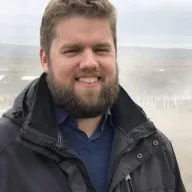
On this episode of the Actual Fluency Podcast, I'm joined by Polyglott Berlin gathering organizer Chuck Smith, and we have a little chat about Polyglott Berlin, Esperanto, and language learning. Welcome to the Actual Fluency Podcast, the podcast that gives you the tools and inspiration to learn languages faster and more efficiently. And now your host, Kris Broholm.
Are you thinking about starting your own language learning website? Then check out Hostgator. Use the coupon code actual fluency to get your first month for just one cent. Get started by going to actualfluency.com/hostgator. Do you like audio books? Well then Audible is for you. If you go to actualfluency.com/book, you can choose a free audio book from a selection of 150,000 titles.
Hello everyone and welcome to yet another episode of the Actual Fluency Podcast, the podcast for language learners and aspiring polyglots. This week, I don't have much to add to the introduction. If you watched me or listen to the last week's episode, which was with Richard Simcott, you might have noticed that I took, you know, a few minutes to talk about my personal situation. And I want to thank all of you who got in touch with me after listening to that episode.
I felt like, you know, obviously, I was sharing quite a lot of personal stuff in that episode. So if you haven't heard it, I definitely recommend that you go back and listen to it. But, uh, I wanted to thank everyone who got in touch with me and kind of, uh, shared with me how my story resonated with them and it was really exciting in a way. I feel like the, kind of the topics that I covered last week aren't usually very popular in the community and obviously that makes sense as, you know, something like depression and, you know, feeling like crap is pretty taboo in general. But, you know, I feel great now and I'm happy to be back with the, uh, Actual Fluency Podcast, uh, episode 22.
And today I have an exciting interview with Mr. Chuck Smith, and Chuck was one of the organizers of Polyglott Berlin, which I was really happy about. And you can, uh, you can read more about that on the Actual Fluency blog, where I actually wrote over 10,000 words about my trip to Berlin. So there's a lot of reading to be done there, but I kind of wanted to make it special, you know, so, so that's why.
Uh, before I hand you over to the actual interview, I just wanted to say that you might have noticed the two kind of advertisements in the beginning of the podcast here. And I am, I just wanted to say that I understand if that might seem a little bit disruptive to the actual fluency podcast, but it's just something that I'm experimenting with. And if you like any of the offers, of course, I'm not going to, you know, I'm not going to put ads on on, you know, get-rich-quick schemes or any kind of, you know, medicine or, it's going to be related to language learning and, and the two offers that I'm currently, that currently have on the podcast are, are very much related to being a language learner, you know, Audible having the all the audio books that you can listen to, a lot of inspiring stuff, you know, Benny Lewis has his own book there that he, he actually, um, read himself, did the voice for, and there are so many really good motivational books and books about languages in general. So, so go and check out Audible, uh, the trial there.
And the reason I recommended Hostgator is because it's the company I use for my blog and every website that I run, and they've been a, a tremendous company, um, so happy to be with them and they have very low competitive pricing, live chat for when you get in trouble and, you know, setting up a blog is automated. You know, most, most web hosts have this automation feature where you just click a button and your blog is set up, but, you know, I'm just wanted to put it out there that if you are thinking about starting your own language learning blog, then I definitely recommend Hostgator. They're very beginner friendly, and if you have any problems with, with, you know, setting it up, uh, with Hostgator, feel free to email me or send me a message via the Actual Fluency blog and I'd be happy to help you out. I love helping people out, particularly when it's something that I know something about. I've set up countless blogs through Hostgator, so very much aware of it.
But, I, I just wanted to thank you again for listening to the podcast. Uh, it's always, always, always humbling to, to see comments and I love to receive feedback as well. So if you have any comments, you can go to the Actual Fluency blog and put your comment in the actual episode blog post. You can send me an email, kris@actualfluency.com, or you can go to the contact page, you can also leave an iTunes review. Anything you want to do is up to you. I just want to say thank you for being a listener and I'll see you, uh, in the next one.
All right, today I'm excited to welcome onto the show Mr. Chuck Smith. Chuck was one of the main organizers for the Polyglott Berlin gathering, which was an incredibly successful event. He's also responsible for the Esperanto blog on Transparent Languages and has been active in the Esperanto community for many years. Chuck, it's so great to have you to talk to you today. How are you feeling?
Oh, great. Thank you.
Fantastic. Uh, of course you're no stranger to the language learning community yourself. But if some people out there might not yet have heard of you, uh, can you give them a little introduction about yourself, how you got into learning languages and perhaps focusing a bit on the Esperanto part?
Wow, that's a long question.
Well, take your time. We got, we got all the time in the world.
Okay, well, I guess I started my journey in language learning by um, learning sign language from my mom. Because she did amateur um, interpretation. And then from there I just learned Spanish in school and then I traveled or then I learned Esperanto and traveled around Europe for a while and Brazil. And from there I was working at the uh, Esperanto Youth Organization in Rotterdam. So in Rotterdam I learned Dutch. And took part in an intensive French course and yeah, so it's just been a passion I've been following for a while now.
That wasn't so long. So uh, that was obviously American Sign Language I suppose you started out with?
Yes. Exactly.
All right, cool. And I mean um, the I think the most interesting thing about the Esperanto um, part of it was that uh, about yeah, 10 months after I started learning it, I founded the Esperanto Wikipedia.
Oh yeah, yeah. Cool.
Which is
But why did you get into Esperanto? Yeah, I mean it's, it sounds pretty crazy, but how did you get into Esperanto? Because not many people hear about it, let alone getting into the, you know, whole organization that way.
Right. It's funny because I was taking a part in a class called Models of Mind at my university. And the uh, was basically an Artificial Intelligence class and I was writing a paper about how computers could learn languages. And I discovered this site that used Esperanto as a bridge language between languages and I thought, oh Esperanto would be a nice language for computers to learn. I thought it was a stupid idea for humans, but computers were cool.
And then later I came across the Passparto Servo, this um, hospitality network around the world where you can stay with Esperanto speakers and I was like, huh, well, I could um, could learn this language myself and, you know, it has a practical reason too.
Wow. That's
I'm one of, I'm one of the few people I think who have learned Esperanto for practical reasons.
Yeah, back then it was great I suppose. Um, did you were you successful with Spanish in school? A lot of the times people come on the show and they're like, I had French in school but I didn't really learn much. Did you find that you were quite good in in Spanish after having it in school or?
Actually, yeah, because I I took the time to really try to find communities, like the the church I was attending had a um, Spanish congregation and so my third year of Spanish I decided to switch between the two congregations to practice my Spanish and that was an amazing help. So,
That's very clever.
But I think, I think if I hadn't done that, then my Spanish would have just sort of fallen out.
Yeah, like it does, you know, school, school languages. So hard to keep up. Um, I definitely want to come back to Esperanto in a moment, because um, you know, I don't know if you know it, but I'm doing the Add One Challenge for Esperanto.
Oh, great.
And um, but before that, I just want to say a huge thank you for your involvement in the Polyglott Berlin gathering. It was such an amazing event. I had such a lot of fun and it was just a great time actually.
Oh, you're welcome. It was a pleasure to organize.
Yeah, really? Can you, can you share how you got involved with hosting the conference, some of the, maybe some of the activities we didn't see leading up to it?
Well, um, Judit was the main organizer and she got me on board and Martin was head of admin, which was, I I'm still amazed at how much work that is to just administrate all these registrations from over 200 people.
Yeah.
And um, so I basically just um, picked up, said I'll just try to take over whatever's left over. And my my my biggest job was organizing all the local volunteers, like on site during the conference. And then like some people one didn't show up and then you're like, okay, now what do we do? Try to find other people last minute and um, yeah, and then I yeah, eventually on site, I ended up being the tech support for the presentations mostly.
Right.
So, whenever anyone had to give a talk, then I would just be there to make sure the computer connected, the sound and whatever they needed to give the presentation and have it work right.
Oh, great. And of course, uh, the very exciting is that you've confirmed that it's going to take place again next year from the 1st of May to through to the 4th of May.
Absolutely.
Are you, uh, excited about that? And what's going to, what are we going to see changed from, from this year?
Well, the biggest change we're going to see is that um, we've we're gearing up from the 200 something people we had this year to 350 next year.
Wow.
So, it's going to be a much bigger event in the same venue. And we're going to change it so that the two main um, talk rooms are going to be the same size, both a big uh, talk room.
Mhm.
Because we don't like this feeling that um, if there's two talks that we have to figure out who is the more important person speaking and that's the way it's more equal and also with just well, with my with my focus on tech, it's they're right behind each other, so I can easily quickly go between the two rooms.
Right.
But maybe not so interesting for your listeners about that detail.
Oh that's not, it's nice to hear some behind the scenes stuff once in a while. Um, so 350 people, what sort of uh, difficulties is, is that going to give you to compared to, you know, I mean, that's quite a few more than this, this time around.
I think it's just the um, just ramping up the the AV, so to make sure that the speakers work in both rooms and there's not interference and that we can have um, good um, filming in both rooms as well because um, once you get in the bigger rooms then uh, filming becomes more complicated because you start having to things like line in into the speaker and things like that.
Right.
Whereas in the, in the other room, of the small room, you just let a camera run all day.
Right.
And then just cut it in the end.
And as for, you know, catering is that still going to be in the a basement of the uh, the venue with them doing it or do you not know that yet?
Yes, yes. Because we had extra space this year and um, and we're working on getting catering for vegans as well from outside.
Oh, that's good for those out there. I know I know there's a few that
Yeah, because we're really we're really frustrated that the venue wouldn't give us vegan food, but what can you do?
I mean, how freaking hard can it be, you know? It doesn't have to be like gourmet vegan, does it? You know, you can just kind of
Yeah.
Make it uh, low low tech or whatever you call it in, in the technical sense.
Yeah, maybe if we would have requested like box lunches or something.
Maybe you can get a salad or something.
We'll find a solution this year.
That's that's amazing. I'm looking forward to it and uh, whenever you open up the registration and payment, I'll I'll send over some money and uh, I'm definitely coming. I don't even care. I don't even I haven't even looked at my calendar. I'll just be there. Don't you
I'm definitely going too.
Great stuff. All right, so um, that was about the conference and um, going back to uh, Esperanto a little bit because obviously, as I'm learning it, I I couldn't pass up the chance to ask uh, a seasoned Esperantist, uh, you know, a few technical questions maybe. Um, it seems very easy. The vocab and the grammar, I'm not, you know, I haven't spent a a whole lot of time on it yet so I'm not, I don't know what the problems are yet, but maybe you can try and and and tell me what sort of things that is a little bit more difficult than you would expect. Or is it just all as easy as as, you know, the the the simple grammar that you can read in a few minutes?
Well, that's a fun question.
There you go. Take it where, wherever you want.
I actually thought about writing a blog post on the difficult uh, the difficulties of Esperanto. So maybe this will give me a boost in thinking of that.
Oh yeah, you should. So what are some of the difficulties off the top of your head?
I mean, obviously, if you have a language made by one person, then they have to release it sometime, the language is not going to be perfect. Um, I think the biggest um, qualm I have with the language is that the country names are um, not completely logical.
Right.
So you might have um, like a Dono lives in Danio. But a Uson, Usonano, an American lives in Usono.
Okay.
And so the basic idea behind that was that if a country is based on its ethnicity, then it's um, and then also yeah. It's even hard to explain. So the idea is like say you have Germanio, which is based on Germans.
Right.
And then you have Germano is a German because it's an ethnicity.
Mhm.
And then Germanio is the country. Whereas if you have a country that's more like a melting pot, or like um, I don't know how you would say it, a colonized country, I guess you'd say, then um, then you would have the country name and then you're a member of that country. Like Usono is the United States and Usonano is a member of the United States.
Right.
But even that's not completely logical because you have, for example, you have Belgo and Belgio. And you have Nederlando and Nederlandano, so it's not completely logical.
But but I don't think that's, I mean, at least that's not what I expected. I I know that a lot of people think that, oh yeah, it's such an easy language. It's a constructed language, so therefore it must have been constructed perfectly. But I mean, I I I certainly don't think that's the case for any con language because there's always, like you say, if there's one person devising it, you're always left to that one person's kind of, you know, whatever he was thinking at the moment and he might not have realized some of the weaknesses in the language.
And I suppose also when it was designed in, you know, uh, 1887 or something, um, you know, some terms, you might be required to put in new terms and then suddenly it's not that one person anymore. And then you have the, I guess that's the Esperanto, what do they call it, the council or something, um, this, the kind of the, the
The Academia.
Right, the academy. So suddenly the decision to bring in new words and stuff is no longer from the original author. So suddenly you're getting this influx, and I'm sure that's for the best anyway, but it it's just the point that it's not a a perfect language and I don't think that exists anyway.
It's also funny because that you mentioned the Akademia because you've got instances also where the academy makes decisions that the general public doesn't follow because they don't like them.
Wow.
Like for example, I think the most high-profile example was with the word computer.
Uh-huh.
Because obviously computers didn't exist when Zamenhof initiated the language in 1887. And um, so they, I mean, there's two ways to bring in new, I mean, word, yeah, for people who aren't familiar with Esperanto, there's two ways to bring in new words into Esperanto. You can either take a word from a national language and Esperanto-ize it, or you can combine Esperanto roots or Esperanto prefixes, suffixes to make a new word. Like, so there's also the schism between say, the neologists who want to make words from the national language and then you have more like the purists who want to make words from like by combining um,
Right.
Prefixes and suffixes and roots together.
It's a lot of fun, I find those, uh, kind of the, the makeup of of the longer words where you have maybe a few different fixes and uh,
Right.
You can kind of break it down if you know the, I think, what was it? Something like 30 or something of the most commonly used and you had like 80% of the, the, the word, uh, frequency. So, so if you know all those, then you can kind of digest a lot of the most commonly used and I just find that kind of fun. It's like a detective work.
Right. So it's funny, the, the example I wanted to mention with the academy was um, they had, oh, I was about computer and um, and they wanted to take it from a national language. So they said, well, let's just call it Komputero. I mean, in many languages computer is just computer. Like in German, um, Dutch and like I can only think of actually French, where it's Ordinateur, where it's something different. But um, so they they said, okay, we're going to ordain, I guess you'd say, that computer is Komputero. But there was a problem with that in that the suffix ERO in Esperanto means a tiny piece of something.
Oh, right.
So, so like if you have Sablo, it means sand and Sableto is a grain of sand. And Pano is bread and Panero is a, uh, a bread crumb.
A small one.
A bread crumb. Which, I mean, you have to think in English, like what is this? Whereas in Esperanto it's just completely natural. Right. I know exactly what this means.
That's the beauty of it, isn't it?
Yeah. So the general public basically saw this and saying, well, Komputero isn't a tiny piece of computing.
Right.
So, um, they took the word Komputilo because ILO means a tool and they're like, it's a computing tool.
That makes a lot of sense actually.
Yeah. So that's how um, they basically rejected the academy's recommendation and Komputilo is the only word people use today for it.
Wow, there you go. And I and I think it makes perfect sense. So the question is, who is at the academy who is stupid enough to do that?
Oh, I I've heard that the academy is like yeah, like politics or um, sausage or uh, Wikipedia, you don't you don't really want to know the process behind.
Like WikiLeaks for uh, for the Esperanto academy. We need a Snowden out here to uh, fix up some information.
I've heard of some cases where they they have votes on things and then it's just barely one side passes and um, and then people are all like, how did that pass?
Wow.
But of course, it's a living language, so everyone can just if they really don't agree with the academy, they can uh, say and it for the public is strong enough then, you know, eventually the academy's decision gets overturned.
That's pretty cool. So, are there any um, are there any loan words, I guess you can call it, in Esperanto where the suffix or prefix, I guess, you know, the Komputero was, was one example. But are there any examples that's actually accepted by the community where the the the spelling indicates some kind of suffix or prefix but it doesn't make sense in the in the meaning of the word?
Um, So like where um, so you're saying like a word where there's a suffix or prefix and it doesn't make sense. Oh, I guess you could think of Papero.
Papero.
Papero is paper. But uh, Papo is a, is the Pope.
Wow.
So Papero is not a tiny piece of the Pope.
Right.
Okay, so,
Okay, so so it it does happen in in Esperanto, uh, right, okay. So, I guess it's a good little balance just to to say that the academy isn't completely retarded. It's just, it's a silly thing to do anyway. Um,
Right. I mean, these things exist and they just, yeah. Everyone makes their own decisions.
Right. Um, and I and you, and you teach Esperanto as well? Uh, I've heard some rumors about it.
Yeah, just so a bit on the side, I was, I was actually funny this year. I haven't taught Esperanto actually in about 10 years.
Oh, really?
And uh, this year I just sort of went in a flurry of teaching. So and um, because I actually teach three courses, well, courses, many courses, um, this year. And I luckily I was able to go to France to attend a uh, seminar on teaching Esperanto.
Oh.
It's about uh, I think 15 people there. That's from around Europe and we just yeah, we we studied under Katalin Kovats, this amazing instructor. It's just wow.
That's good.
Yeah. And um, and then from that I went and I taught a mini Esperanto course in Berlin. It was a weekend course, uh, intensive course. And then uh, let's see, then at the Polyglott gathering I gave an intro to Esperanto in Esperanto, which was quite fun.
Yeah, I saw, I saw it. I um, I I I sadly couldn't attend. I don't know, you know, it's funny when you're at a conference, it's like, yeah, I gotta go to this. I'm doing Esperanto. I know I'm doing it. And then suddenly you're in the lobby, you know, you're talking to people and the time goes over or there was another talk in the other room that you were like, well, like that sounds interesting as well.
But uh, luckily most of them are recorded and I can only recommend that people go to the official Polyglott gathering YouTube channel. I'll put a link in the uh, the blog post with this episode and uh, and you can check out, uh, your video just went live. I think it was yesterday or something. So people can, uh, can check out how it is to and it's funny to see that even though you're speaking completely in Esperanto, of course, it's a little bit simplified, it's not you're not speaking at at natural pace, but people are just like, yeah, I totally understand this. No problem.
I mean, people, if you did, if you went in and spoke in let's say Mongolian or something, they'd be like, what the is going on here? But because it's so, it it's so easy to understand and and it takes its vocabulary from so many similar languages, you can just kind of it's just natural. I mean, I I've done some, I think I've done about 200 words now in in Memrise. And every single word I've just been like, well, that makes perfect sense, because I have knowledge of French and German and English. And that's and actually, I also have knowledge of Russian, which I I've seen a few examples of of similarities as well, but I don't know if if Russian got it from English and then he got it from Russian or whatever way it is around, but basically if you have knowledge of European languages, Esperanto vocabulary is going to be incredibly easy to learn.
Yeah. And I think that if you're, if you're a polyglott, then it could be very advantageous to get an Esperanto etymological dictionary to see where the words are coming from.
Right.
They can also help you remember like, oh, that's comes from Russian. Oh, right. Or this comes from French.
Right. Link it with the other languages.
Yeah. And actually one thing I want to say about the talk I had, um, was that uh, one one way I sort of cheated in making people understand is that the the slides were actually in English that behind me.
Right.
Follow along. And there's one thing we're really striving for next year more is to have more people give talks in one language and then have slides in another language.
Mhm.
So that they can people can follow even if they don't understand the language of the talk itself.
Right. Yeah, that's a good idea.
I think the most extreme case we had this year was um, oh yeah, Manuela gave a talk in Italian with slides in Serbian.
Wow.
So, like, really? Okay.
Okay, maybe he just
I heard it was a really good talk too.
Oh, maybe he reused his slides from the Polyglott conference or something. That was that's a good that's going to be in Serbia this year. Um, all right, so that's cool. Uh, do you have any kind of uh, ninja tips and tricks for people out there learning Esperanto? Uh, such as myself.
Um, well, if you if you're just starting out, I'd highly recommend go to um, lernu.net.
Mhm.
Because that's an amazing resource and it's all completely free.
Yeah, did some of the courses there, um, the Anapana and uh, those just to get a feel for kind of sentence structure and and and some feeling. Um, but is there anything you can, I mean, I I know I we talked about the Passporto all the tutto mondo. Uh, which I find pretty interesting.
Um, and for those who don't know, it's basically an educational VHS set. Um, that's, I don't know how old it is. It must be like 20 years old or something. Maybe more, I don't know. But uh, basically it's like a small sitcom and they it's all in Esperanto. And it's it's kind of simplified like like your talk. And then at the beginning and end there's this speaker woman who's like wrapping things up and if you actually bought the the set, you got this workbook and I'm sure you can find the PDF of that online somewhere. Um, but to me, that's just a brilliant use of, you know, you're in the language, you're seeing it being used. It makes sense. I mean, if they did that for more languages, I'm sure that would be a very valuable resource.
Yeah, I think Passporto is really good if you want to get up to speed understanding and speaking very quickly. Because I had um, actually my, the third course I taught this year was to um, students from Princeton visiting the University de Geneve in Switzerland. And there um, yeah, they many weren't content with uh, Passporto, but I think that was because their main goal was more to get the feel of the grammar and the structure of the language.
So if if it really depends on what your goal is because some people just want to read it and then in that case I'd say, well, just read it because you can already probably understand a lot of it. And just learn like the basics of grammar, which you can get online somewhere. If you want to speak it, then yeah, Passporto is amazing because it just gets you right in. You can just keep watching and learning more and I mean, it depends on what your learning style is. If you like the grammar top-down approach or if you like just sort of be immersed and and then be explained what what you just saw.
Yeah. I I just wanted to mention it because I I thought it was really cool and I haven't seen anything similar to other languages where they've done, I mean, it's a very low-budget production, let's be honest, but they've done a lot of work of making it into an actual kind of sitcom thing. You know, whereas you can get maybe beginner style videos with a guy just sitting there talking or something. That's not the same at all because here you can see the action and, you know, they have they have the labels on the bottle bottles. That's really hilarious. It's like, oh, this must be water, even though there's huge red letters that says Wodko on it. It's like, yeah, this must be mineral water. Of course. But anyways, it's good fun. Actually the, I guess the the the low budget aspect of it makes it kind of funny to watch as well, so that helps you stay uh, focused.
Um. Yeah, and one thing I I want to make sure to point out if you do start learning with the lernu courses because I know that um, I don't I don't know if your listeners are familiar with Lauren, she took the six-week challenge from Benny. And um, and she was started and she she found the first course they offered on lernu, she really didn't like it at all. But the thing is there's um, multiple beginner courses and the idea is that there's different courses for um, different learning styles, like there's one that's learning like a puzzle if you like more of a game-based approach and there's one that's more dialogue based, which she ended up going with. And the the first one was more of a um, like this is an apple and that is a yeah and and she just found it, she was like, I'm totally bored right now. Like so, I mean, different people have very different approaches and different things to keep them motivated.
I mean, like a lot of times on language learning forums, there's this um, it comes up the the question, what's the most ideal way to learn Swedish? And then you you get the uh, large um, like debates about, oh, I like Pimsleur, I like blah blah blah and and um, and then and then someone always ends up saying, the best uh, language materials are the ones that you enjoy using. Right. So it's a really key like, even if someone says like, Pimsleur is horrible because this method is better, but if you like Pimsleur, just use it and enjoy it. I mean, they don't have Pimsleur for Esperanto unfortunately, but I mean, or any language there's and I always recommend if you're learning a language, it doesn't matter what the language is, always have more than one um, source.
Right.
As you'll find that either you'll find you'll get bored with one source or you'll find that um, you'll you just won't get that repetition that you'll get if you have multiple sources because once you see like, like with French for example, I'm currently using Michel Thomas for like audio and speaking and I'm reading a book about video game history just to get the reading practice in and I'm using Duolingo to get the like writing reading in. And I just find that all these different approaches keep everything fresh and I'd like, okay, right now, oh, I don't really want to do Duolingo, but I don't mind just lying in bed and listening to the Michel Thomas or like I'm I'm out at the park. Let's just read my Kindle and read this French book.
There you go. I mean, I I totally agree. Having a having a diverse approach to to resources is is definitely a a top go. If you had to give your own, sorry, what was that?
Yeah, and I just wanted to say and also when you see that a word appear in multiple sources, then you you think in your head like, this is a really important word. I better get this one down.
Right. So what do you um, I guess, you know, what I often do on the episodes is that I ask the guest that on about their language learning approach and even though in my heart and what we just talk about, I believe that you should find your own, but I believe I also believe in the the fact that by sharing kind of other people's approach that we can inspire people to find their own. So, so if I asked you what what's your prefer, preferable, um, preferred way, you just mentioned that you liked a few different resources, having some audio, having some text. Um, so that probably answers that question. But how do you stay motivated? Because we briefly touched on that a little while ago. How do you stay motivated? Because that's probably the number one question people ask on on on language forums as well.
For me personally, it's having some like I guess event at the end of your learning. Like um, if I know that say in two months I'm going to Poland, then I'll be a whole lot more motivated to like study the Pimsleur every day. Or if I know that um, like for right now, like, well, a while back I was um, going to teach in Geneva for a month, so that was a huge motivation to study French.
And then I can also say like, um, okay, I see that I have two months to before I go to France or before I go to Geneva. So, and my this course I want to finish is nine hours long. So nine hours divided by 30 days. And that that actually didn't work out for me, but because I I knew it was 15 minutes, but I just got it it was just a bit too advanced for my level. So I ended up repeating stuff, but at least just knowing this like 15 minutes a day, like, I can do 15 minutes a day. That's not a that's not but if you just have like this course, you're saying, oh, I have nine hours to do. How am I ever going to finish this? So I think breaking it down and like having a concrete goal to me.
And um, like right now, it's funny because I'm learning French and Dutch. And I'm learning Dutch for a very funny reason because in November I'm taking an intensive French course in France where I'll be studying French for eight hours a day in some castle somewhere, which is crazy. And and then so I have, and the the funny thing about this is that I'll be learning only with Dutch people. Okay. So the course will be in French with like explanations in Dutch. So I'm I'm learning Dutch to um, be able to try to understand the explanations at this point, which is quite quite insane.
You're learning Dutch to try and learn French, is what you're saying.
Yes. Exactly.
Um, this might be a silly question, but couldn't you have found a French course in in French or in with English explanations or German explanations or Esperanto explanations. Anything but Dutch.
I could, but I, I don't, I know the instructor and he's amazingly good. Um, yeah, um, Sylvain Lalage. If um, people
Oh yeah, yeah, yeah.
He was at the Polyglott gathering as well.
Yeah, I met him. He's good fun also.
Yeah, he has a company called Talent for Talent. So I'll just put a plug in there for him. Yeah, he's just these immersion courses and it's just amazing. But they're for Dutch people. So I lived I lived a year in um, Rotterdam in 2002. So I'm just like, refreshing up on my Dutch.
You got some of it. You got some of the basics already.
So with that, I've been just using Duolingo just because I love Duolingo and I've actually gotten addicted to this game show called Lingo.
Lingo.
Lingo. And uh, which is a um, it's actually a word game, game show. And it's funny because I found that game shows interesting because in every episode, I mean, the the the language is quite simple. I mean, it's like it's your turn or um, now, yeah, now it's time to pick letters from a board or something like that. And and then they use the same words every time. And also, every every episode they do introductions, which is the exactly the language you need if you're meeting new people and uh, oh yeah. foreign language. Yeah. So like, this person is an engineer, this person works in marketing and and it's really interesting just to get this this kind of like an introduction every episode.
Yeah. And it's in in Dutch.
Right, it's in Dutch. I mean, they've they've made this game show in different languages.
It sounds a bit like Countdown, but I'm not sure if it's if it's exactly the same.
Uh Countdown is quite different. It's like, well, Countdown has the math aspects.
Yeah, there's a bit of numbers in there too. That's true.
Yeah, but I guess this this intellectual game show type feel is sort of what you get there. Because I was surprised when I saw the American version, they dumped it down to all five-letter words. I'm like, really?
Wow.
Not Hollywood-izing the game show.
Okay. Maybe they're afraid that the Americans might never get above five anyway, so I don't know.
The Dutch the Dutch show has everything from five to 10 letter words and
Right.
Yeah.
They made it American. No, that's pretty funny. All right, that's so cool. Um, do you have any kind of um, you know, you talked about Michel Thomas, do you have any kind of resources or, I guess we can go back to the ninja tips. We talked about Esperanto. Do you have any kind of uh, I guess obscure ways of learning a language that isn't, you know, Pimsleur or reading a book or something? Do you have any kind of uh, a thing you do specially?
Well, um, personally, well, first I want to mention that if you're learning, uh, believe it, Spanish, French and Japanese, um, Judit Meyer made this amazing series called 72 Ways to Learn ebooks.
Yeah. I've seen those.
So, yeah. So, if you're learning one of those, check out that on, uh, Amazon and just is amazing, I mean, really in-depth all these different methods you can learn. It's like I I can't even compare to her in trying to figure out like everything you can do.
Um, I mean, I think just finding some, I think the hardest part is starting out and I really recommend something like Michel Thomas or Pimsleur just to get a feel and to get to get get understanding of the language. And some people can't stand that um, I I think either one of those methods or Assimil, which has the passive phase and the active phase. I mean, if you're more of a visual person, I'd say go for Assimil to start. And if you're more of a um, um, like just like speaking, listening type person. Or if you or it also depends on what your goal. If your goal is writing and and um, um, writing and reading, yeah. Then Assimil or if your goal is more um, listening and speaking, then I'd go more for the Michel Thomas or Pimsleur approach.
Yeah. I love the Michel Thomas. I think it's, it's an incredibly high-quality course. I guess the only problem is that you don't get a whole lot of words, but you do get a lot of sentences. Like you can learn how to construct sentences rather than, you know, the Pimsleur's kind of like listen and repeat and I I did the Russian one for Pimsleur. And I wouldn't say that I got bored, but it wasn't really that exciting. But if I was doing Michel Thomas, I tried the, uh, I tried the Russian one for once. Uh, and it was just like every everything the the teacher said was not like this is how to say. Of course, she did give you some words, but it was more like, if this is how to say this, how would you say that? So you're constantly thinking about it.
Right.
I think the main thing that these courses give you is the the confidence to speak. Because I mean, I'm I'm here from so many people learning languages. They say, um, but how can I start speaking, especially um, like I know a lot of foreigners who live in in Berlin. And they're always like, they're taking German courses, but I've never actually heard them speak it. And I'm like, why don't you speak it? They're like, oh, I'm not ready yet. But if you if you study with say Pimsleur or um, uh, Michel Thomas, then you're speaking from the first minute. And then you're uh,
You can say something, right? I mean, even if it's just uh, guten tag, ich heiße Kristoffer, wie bist du, you know, that's a start. And then you can switch to English, whatever, that's fine. But then the next time you'll say two sentences and then you'll say 10.
I mean, I went to the Russian institute for culture in Copenhagen and it sounds really nice, like you would imagine a big building with like libraries and, you know, lots of Russian stuff. But it was actually not really open to the public. It's more like offices that once in a while had an exhibition or did some evening classes.
Okay. And I walked in and there was this Russian woman and I I think I spoke three sentences to her. I said like, hey, my name is, I'm learning Russian and I don't speak it very well or something. And then she responded in the fastest Russian I've ever ever heard. So I didn't understand anything and then we switched to Danish again. And that's fine. I I was like, that's a huge win for me because I'm I'm one of those people that you mentioned. I'm I'm terrible at speaking. I'm like, oh shit, what do I say? What do I say? Um, but but I can only say that by doing that, and then also I met somebody in the in the dormitory bar. I met a guy from um, Latvia, I think. And he speaks Russian as his first language, so I spoke a little bit with him. And I can just feel every time I do that, it just gets easier. Right. So, I guess I just want to kind of inspire people to just do it. And it don't expect to have a 10-minute conversation in your new language, because you're not going to do that. But if you can have just two sentences or understand a question and, you know, isn't that great?
Oh, even like in your in a foreign country and you just tried to to say the things like um, like I would like to buy this or just like the normal conversation you would have with a clerk. If they don't understand or like you're buying a sandwich and then if you don't understand you can just, well, I'm sorry, I don't. I mean, this works best at airports obviously, because you know they'll also speak English.
Yeah. Exactly. It's great. Well, you know, Chuck, I've had a lot of fun and um, I'm definitely happy, uh, you came on the show to talk about Esperanto and and language learning. Um, what are you preparing for the Polyglott gathering? Obviously, you're doing some French and Dutch now. Do you have any kind of language projects in in store for for the, uh, gathering?
Um, not anything in particular. I keep wanting to get back to Polish. And then, I don't know. Indonesian is always an interesting thought because just learning some Asian language is always interesting and I've always found Indonesian, it sounds so cool.
Yeah. It looks easy as well. I know you it's it's a dangerous thing to say about languages, but
No, no, it's true. I mean, it's one of the, I mean, most people say it's the easiest national language in the world.
Right. Well, there you go.
To make things plural, you just say them twice. Like, okay, well, that's great.
I think that's a great thing. It it's it's really great. It's almost like a pidgin, but uh, but it is a real language. All right, that's so cool. I'm looking so much forward to the conference and uh, like I said, sign me up. Take my money now. I'm I'm there. And uh, and and and thank you so much. I'll see you in in Germany.
Okay, I'll see you then. Thank you very much for having me.
No problem. Bye.
Okay. Bye.
Hello everyone, this is uh, Kris again. Recording this after the interview finished. I just wanted to say that after the interview had finished, Chuck was very uh, frustrated with himself because he forgot to mention the URL of his blog. And I've I really like his blog. There's a lot of Esperanto and language learning tips and tricks. So I just thought I'd, I'd take this extra moment to give a shout out to that. Um, unfortunately the URL is a little bit long. So I decided to create a an Actual Fluency redirect. So if you just go to actualfluency.com and then put a forward slash Chuck in there, you'll be redirected to the blog. Alternatively, if you don't want to do that, you can go to Transparent Languages and you can find the blog section and Chuck's is the one about Esperanto.
Um, thank you again to Chuck for coming on the show and providing such great content and knowledge and I'll see you guys for episode 23. Thank you for listening to the Actual Fluency Podcast. For more information, be sure to check out actualfluency.com. Until next time, enjoy learning and have a great day.