Miroslav Šedivý: Seize every opportunity to learn languages!
Kris Broholm interviews Miroslav Šedivý, a long-time supporter, about his language learning journey. Miroslav shares his origin story, detailing early exposure to Slovak, Czech, Hungarian, Croatian, and German through family, travel, and television in Bratislava. Kris acknowledges Miroslav's significant contributions to the podcast's success.
November 4, 2018 · 57 min
EP 133: Miroslav Šedivý: Seize every opportunity to learn languages!
0:00 / 57:00
Guest
Miroslav Šedivý
What You'll Hear
- 1 Host Intro: Meet My Biggest Fan ▶ 0:00
- 2 Childhood Languages: Slovak, Croatian, German, Russian ▶ 3:00
- 3 Intensive French Bilingual High School Journey ▶ 9:30
- 4 University: Polish, German, Spanish Self-Learning ▶ 19:00
- 5 Discovering the Polyglot Conferences and Meetups ▶ 29:00
- 6 Miro's Honest Review of Language Apps ▶ 43:00
- 7 Inspiring Others Beyond Language Learning ▶ 52:00
Links Mentioned
Questions Covered in the Show
What languages did Miroslav learn first and how did he start learning them?- 5m
Why did Miroslav attend English and French bilingual schools?- 19m
How did Miroslav continue learning and adding new languages after completing university?- 26m
What are the difficulties of learning Spanish and Italian at the same time?- 29m
What is Miroslav's method for learning multiple languages?- 41m
How can language learners connect with the polyglot community and other learners?- 36m
Related Episodes
See all →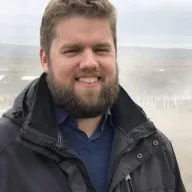
Hello everyone and welcome to Actual Fluency Podcast 133, the podcast for language learners and aspiring polyglots, where we talk to some of the world's best language learners and top polyglots as well. Today I'm joined by Miroslav Shudovi and actually Miro has been listening to the show since the beginning. He came up to me at the first polyglot gathering in Berlin, 2014, which he helped organize. And he showed me his phone with the terrible Actual Fluency Podcast logo on it. Uh it's still terrible, but hopefully we'll get to that at some point.
And ever since he's been really supportive in at every event I've met him, and he sent loads of emails of support and suggestions and even told me when there were some things that weren't working or some things that I could improve on. So, I really appreciate him and what he's done for the community as well as for the Actual Fluency Podcast, because I am actually quite sure that I would never made it to 133 episodes if it wasn't for Miro. So, I owe him a lot, and if you guys like the podcast, then you definitely also owe him. He's a he's a big big influence on on the show.
So, I'm happy to finally get a chance to sit down with him and and listen to his origin story because it's it's just really fascinating. So, before I just let you go with the recording here, I just want to thank this show's sponsor, which is Glossika. Glossika provide audio programs in more than 50 languages and you can get started for free at try.glossika.com. And if you enjoy it, it's a monthly subscription service, but you do get access to all of the languages in that price, so you don't have to pay separately for each language, which is makes it a really awesome polyglot tool if you are just above beginner level. I wouldn't recommend trying it if you're just starting out, but if you have some experience in the language you want to learn, definitely go to try.glossika.com and give it a a shot. And now for today's main segment. So, Miro, it's been a long time coming, but you're finally here. You finally agreed to come on the podcast and and share your story with the the listeners. So, uh, why don't we just dive straight in? How did you get started in this wonderful world of languages and what was your first language you you learned?
Uh, hi Kris, thank you for the invitation. Oh, it's a long story. I'm, I have already a few years behind me. So, when it started, oh, I was born in Bratislava, in Czechoslovakia. So my mother tongue is Slovak, and my father tongue is Czech. Uh, before I went to school, I actually didn't see a lot of difference between these two languages. So, I listened to both of them and spoke a mixture of them. Um, and then later, later, as a child, I I've heard a lot of Hungarian, but unfortunately, never learned it correctly.
Um, then we went from in summers we went to Yugoslavia for summer holiday with my family. Um, and I remember when I was five or six, we had a tourist book with a small dictionary of about 200 words you usually need as a tourist. And I remember I wanted to go to a shop and ask for a bread. And there were just a few Slovak words translated into Croatian words. So I just built a Slovak phrase. So I thought, okay, if a word is not in a dictionary, it has to be the same like in Slovak, so I just told a Slovak sentence with a few words replaced by Croatian ones. But the shopkeeper he understood, and "Ah, Chechoslovak, okay, okay." He gave me the bread I wanted.
Um, since I lived in Bratislava, this is at the border of Austria and Hungary. And uh all we could get from Austria was the television signal, so we had directly we could watch the Austrian television directly at the border, because there were no satellites or cable TV. We are speaking about mid 80s. Um, so as a child I watched the Austrian television uh quite a lot, because uh there were some cartoons that were not on the Chechoslovak television. Um, so I remember always on Tuesday evening at 5:00, there was a fat guy sitting there speaking about some stories. I didn't understand a word. But from time to time there was Tom and Jerry. So I just was, I was just looking forward to it. And for us German was a foreign language, like a very strange language. We didn't really understand. Uh, and it comes actually from the Slavic name of of the Germans. You know in most Slavic languages, Germany or Germans are called Nemets. It means someone who is mute. Okay, who speaks or who doesn't speak your language. And in the kindergarten with my friends, oh, let's speak some German, and we were just talking some gibberish uh without uh any sense.
So, later, uh it was still in the 80s, I went to a English language primary school. There was one like that in our city. Where we started to learn English before we started learning Russian. Actually in Czechoslovakia it was obligatory to learn Russian from the age of 10. But with English we started already at the age of eight. Um, and now I understand it very well, but at those times it was so strange that our teacher, uh she didn't want us to tell her Mrs. Comrade, because all teachers were comrades in the No, no, no, I'm Mrs., I'm Mrs., and you don't tell me comrade. So, and then when I was 10, uh I started I started learning Russian, because everybody had to. Uh, but it was in 89, and then uh came the Velvet Revolution. And suddenly, uh we stopped learning Russian, and all Russian teachers became English, German, or Slovak language teachers. Uh, so, but this one year was enough to learn the the writing system, Cyrillic alphabet, and to also to learn some some grammar. Actually it's quite quite similar to Slovak, so if someone is speaking Russian, we can understand it quite well, just the vocabulary.
Later came French. I went to a French bilingual high school in Bratislava. This was a nice system in Slovakia. There were a few high schools, uh bilingual high schools, where you could you could learn English, German, French, Italian, Spanish, for different uh such high schools. Um, the first year, they you you have just had to learn the language. Like 20 hours per week of language learning. And then in the following years we got uh we have we had other subjects like uh biology, mathematics, uh physics, uh chemistry. And someone in the in the language. So that's why that's the way how I learned French. And when I remember I was the only one in our class who never learned French before.
Uh, there are some there are some strange details in in French that uh I couldn't understand why they work like this. I never knew before, for example, that the French they can count only until until 60. And after 69, there is 60, 10, 60, 11, And but the system was great. We really learned and after five or six months we went to France for one week to to visit some random French families. And imagine that after having learned after study of of French for five months you come to some family, they don't speak anything else than French. And you spend with them a whole week. They prepared dinner. There is some sort of meat, and I ask, what's that? And they say, c'est du lapin. And, okay, lapin. It sounds like la is always the the the article. Et pin, it must be some sort of a meat. So I just, okay, un instant. I went to my room, took my French-Slovak dictionary. And then search thought for for this word and. it can be written in any way in French, no. So I just saw all the possibilities and I didn't find anything similar. Like, it can be a bread. But of course, it was a piece of meat. And I couldn't find it, so I just gave them the book and they said, no, no, it's not like P, it starts with L. So, lapin, it's it's already the article there is no article. Lapin is the word. It was the first and the last time I used a dictionary in France and just put it away and then since then I just always ask when I didn't understand something and they explained it to me. Also I could explain everything with a few words I knew.
How did you um, I mean, I think it's interesting that of course you had many languages around you naturally. But whose idea was it to go to first of all an English school and then another bilingual school with French and and German? Was that, were you that excited about languages, or was it your parents' idea to give you a bit of a advantage?
It it it it it were my parents. Because they had some friends who had children at the same school a year before. So it was I just tried to get there. These were state schools, so they didn't cost anything. It was just uh you had to to get there, pass some exams at the beginning.
I think they could be great to roll out globally. Like uh, schools in other languages or maybe a year of each or something. Because kids are kids are so receptive at the young ages, you know. They don't really care what language they play in, especially when they're really young. But
But that's not really young. English was
Oh, you're still playing. You can play football then or whatever. You can play some some sport. That you don't need to speak to to play uh any sport with the with the friends in school.
Yeah. Yeah, but these it was really quite intense intensive way, because in the high school, after we had other subjects like uh mathematics and uh biology, and so on in uh in French. So there are even many things of the from the high school that I know them, I know how to tell them in French, but not in Slovak.
In Slovak?
Yeah.
Can't tell. I remember doing, I did uh an English high school diploma. And I remember just doing maths and physics in another language, which is so confusing, because there's there's not necessarily a link between how to say it in, in my case, Danish, and then in English. And I just, it really made it all a lot harder. So I can really understand how you must have felt as well going into, I mean French must be as a as a Slovak must be really foreign.
It's a completely different language, of course, yeah. But the infrastructure was great, because the French government sent us all the books. There was a City France, the French institute in Bratislava, where we could uh borrow books and uh videos and CDs at that time.
Um, so and we also went to France uh once a year for for a week. Also, the other families from France, they came to Bratislava. They had no interest in learning Slovak, of course, but for those children of 15, 16, 17 years of age, it was of course great to get away from the family and to gets to a country where beer is so cheap.
I've seen that, yeah. It's dangerous. So, so what happened next, uh where did you go after the French and and German bilingual school? Was that, did that, was that a high school program or was that?
It was a high school. It was a high school. So until high school diploma. Uh, and we did actually the French diploma. My German was still almost nonexistent. Uh, actually, when you live in Bratislava, and you speak the Slovak, the local dialect, it is a mixture of German, Hungarian, Czech and Slovak. So, we if you are from Bratislava and you speak the local dialect, you understand a lot of German. You don't understand the grammar, because we use the Slovak grammar, but we use many, many German, Hungarian and Czech words. So, that's this is also a dialect that sounds so strange to other Slovaks, who don't really like it. But for us, it is useful because we can understand quite a lot of Hungarian and German. But my German was like, we went to France but passing through Austria and Germany I just didn't understand anything. But I was not able to to speak to local people. Also in Bratislava we are at the border to to Austria, and went to Austria from time to time, but I didn't really speak the language. It was much, much, much later.
Then uh, I went after the high school I went to University in France. Because with the with the diploma, it was so uh it was actually no problem to get there. Um, and it was in Lyon, and it was the place where I learned Polish.
Okay, of course.
Yeah. At the university residence I spent I was my roommate was from Poland during two years. And at the beginning he spoke Polish, I spoke Slovak, and after one year he spoke Slovak, and I speak I spoke Polish. There are quite many uh false friends between Polish and Slovak, so at the beginning, of course, it was funny to compare some words that mean something completely different. Like meškac in Polish means to to live somewhere, and in Slovak means to come to come late somewhere. And also if you in Slovakia in on shops you see text like fresh bread, fresh milk, and the word fresh in Slovak is čerství and in Polish it means something old. So Polish people they don't don't like to buy uh by food in Slovakia, because there it is fresh.
So opposite.
Yeah. And then it was possible to get as a Erasmus student to abroad from France, where it was Germany, finally, to to learn some German. Uh, and at the beginning it was uh quite difficult. Um, I remember the first day the mayor of the city they he he organized a welcoming party for all foreign students that came there in that year. Uh, and the in the city hall, and he was speaking, speaking, speaking for half an hour. I don't remember much, but his last sentence was Ich wünsche euch, dass ihr euch in der beziehungsweise in die Stadt verliebt.
You don't understand? Uh, and all, it's a good, it's a good German word.
Ich I wish you I wish you to fall in love with the city or in the city.
Yes.
Yeah.
is nice. I like that.
Yeah, it was actually no. it's like or.
And or, yeah, and or. Yeah, yeah. It's it's great word.
So, so with uh with uh my Bratislava dialect, I could understand every word. I didn't see the difference between in der Stadt and in die Stadt.
Ah, right.
It's one of with the city or in the city.
Yes, it's quite a significant difference, yeah.
Yeah. Uh, but after later it uh it uh worked much better. But actually I live in a region that uh that says, wir können alles außer Hochdeutsch, which is the region we can do everything except for standard German.
Right. That's quite confusing for for people like me who pretty much only learned standard German. I had a I had a Swiss roommate for a while. That's a very confusing dialect I find.
Yeah, yeah, Swiss. No.
It's not easy. It's not not so not so easy to understand them.
No.
And so you you did you fall in love with the city?
Oof, yeah, I still live here and uh it's uh it's quite nice to to live here. Weather is nice, except for summer. And summer is too hot here.
It's too hot, yeah. Well, we're all, yeah. Yeah, we all have that problem right now with the too hot. At least this summer, it's been even in England it's been too hot. So, it's everywhere now. So what, what, what's
Yeah.
So, that's all, that's everything. So, that's it? Well, um, so one thing that that comes to mind, um, is this, you've seen you seem to have kind of taken all opportunities you could. Well, some of them might be maybe you didn't even take the decision yourself, but you definitely got all the the places you you could get to to keep growing and keep learning more languages. When did you start uh to or when you were done with university, how was it to become or suddenly have to do it yourself? Or suddenly did you keep working on your old languages or did how did you start adding new ones after that?
Everyone was a different, everyone of them was uh different. I remember at the university in France, I took uh course of Spanish. That was the only foreigner in that class. And the teacher she really enjoyed it that I was there, because she told some word and she asked me to repeat it before the French students uh had to repeat it. So for example, in in Spanish I'm a foreigner, soy extranjero. If I tell it with Slovak accent, soy extranjero, it sounds almost like Spanish. For French French students usually they read it somehow like something like. Yeah.
But so with Spanish later I just tried to to learn Spanish when I discovered podcasts. Podcast like not a language learning podcast, but on the Spanish national radio there was um popular science podcast every week, La Guardián de la Ciencia. It was every week. It was one hour about science, but popular science. And it was really well made. Like there were biographies of some scientists with with music, with with voices of people speaking for them. It I really enjoyed it and I listened to that every every day. Also older older episodes. Half an hour every day, and after one, two years I just started speaking Spanish.
Super nice.
And then came Italian, Italian. And Italian. Unfortunately I started it too early. So learning Spanish and Italian at the same time is a very bad idea.
Okay. What happened?
I just mixed I I could understand both languages, but when I spoke one language I just started mixing words from the other language.
Hey guys, just taking a quick break from today's episode to talk about Glossika, which is the show's sponsor. So Glossika provide audio programs in 50 languages and they're all based on space repetition. And Glossika has a really laid-back approach when it comes to memorization. So typically, language learning apps are going to be focused on kind of bombarding the short-term memory, like Anki or Memrise. You'll keep doing it and eventually it will pass over to the long-term memory. But it can seem a little bit stressful, because you have to do a lot of clicking. There's a lot of testing. Um, so it doesn't really in that sense give you the calmness that the memory sometimes wants.
Glossika is a little bit different in that sense in that when you do the reps, which are the name for the daily training that it suggests you do, which is one 20 minute session roughly. You get a lot of repetition, but you don't have to click anything. You don't have to type anything. There are tools and games available to supplement these reps. But what you basically want to be doing is just hands off and just study these reps. And you will you will slowly improve your vocabulary, improve your listening of the language and also your grammatical understanding. And this is all done through context. So you don't have to do any actual studying or thinking. It's just basically a really nice approach, especially if you're like me, a little bit on the lazy side when it comes to studying.
So, if you want to give Glossika a try, go to try.glossika.com. And there's a free 1000 rep trial you can get started on. And otherwise, it's a paid monthly subscription where you get access to all 50 languages. So it's perfect for the aspiring polyglot as well. And for now, let's go back to the episode with Miro.
All right. And then in uh, I guess where our story starts, is in uh 2000 and 4, I think. Uh, could be.
14.
Oh, yes, sorry. 2014, yeah. I was going a little bit too far back. I haven't been podcasting for, uh, 17 years now. I know. Um, so the first, the first I heard about the sort of polyglot movement and even the word polyglot, I think, I I might have seen it before, but I probably didn't even think what it meant. Um, but then I found, I think I was uh, just, uh, just surfing the web, and I found Benny's blog about how he was traveling and learning languages and,
The same for me.
It looked like a really cool, uh, lifestyle. And then I was like, I want to find out how this, how people do this. And so, the podcast was started in March 2000, 2000, 14. And the first polyglot gathering, which was in Berlin. Well, sorry, we should probably mention that the first polyglot conference, which more or less started the whole thing I guess, was in
Yeah.
fall of 2013 in in Budapest. I didn't even, I didn't even hear of it. I I I think I read a post about after the event had finished. I was like, ah, missed it. Um, but um, so in 2014 and I came into the polyglot gathering. And I think I had released about 10 episodes, maybe seven, maybe less, I don't know. And, um, it was, uh, I didn't know anyone at the conference. I I talked to, obviously, interviewed a few people, and I had, uh, you know, Kris Haff, um, I I talked to a little bit on Facebook. But when I came to the conference, the polyglot gathering, the first, uh, I was really, I didn't really know anything or anyone, really. But, uh, one night, maybe it's already on the first day, I, I, I don't remember. But you came over and,
Yeah.
and you and you showed me your phone, and, uh, and uh you had a lot of podcasts. It was very clear that you really embrace that format and you, uh, I I guess you use it for everything, even on learning and information, news and, and everything. But there was my terrible, uh, logo of Actual Fluency in its very early days. And I just want to first of all, just thank you for that moment. That was a very pure and, and beautiful moment as a, you know, fledgling podcaster, not really sure.
Kris, I have to interrupt you. You were the first podcast author that I've met in person. So, in my list of of so many podcasts, it was for the first time I could speak to the author of the podcast and tell him, ah, hey, you're doing a great job.
Yeah, and, and like I said, I I just want to thank you for that. Um, I mentioned it before and it I I don't know, maybe it's just me, but the, especially when you start something new, the support of people means everything. So when you came over and, and I could see you had more than just my podcast. So I knew you weren't just, uh, comparing me to nothing, you know, I I knew that.
No, no.
I knew that you'd be, well, and also to be fair, you you have given me a lot of, uh, good, uh, points of feedback, which I've tried to take forward where possible. Uh, so that's also something that I really, uh, really appreciate.
But, but more about the, just that point starting out, having absolutely no idea what I was doing at that conference, uh, to you coming over, it really set the tone for the whole thing. And honestly, it's probably the reason, one of the few individual reasons that I kept doing it, the podcast for so long. But also came back to the gathering, had a great time the first time. Just having an ally, you know, in this kind of, uh, you know, when you go to the conference, it's 200 strangers you haven't met. Like I even Judith didn't know who I was, even though I interviewed her three weeks earlier. I don't blame her, but, you know, I'm just, who I'm just a kid, you know, I'm just a nobody. Um, but that, that was rough. It was kind of like camp, you know, you go to a camp and there's 200 unknown, uh, faces there. And, and at the last day, of course, everyone is happy, everyone is friends. Everyone has found kind of people with similar interests. But that, this was on the first day, I'm quite sure that we did this. So it really, it really meant a lot to me. It still means a lot to me today. And, uh, I still, I still call you my biggest fan. Um, so, so thank you for that first and foremost.
But, uh, and you obviously you were volunteering and you have been for a few years. We can talk about that in a second. But, what, what, how did you, uh, what was your story of on finding the the sort of polyglot community, the whole movement that we're become such a big part of now?
Mhm. Well, I didn't know so many people who were who had languages as a as a hobby. Uh, so for me, uh, it was also reading blogs, uh, watching some YouTube videos online. And then I heard about this polyglot conference in Budapest. So I went there just as a normal participant. And then it was my first and last polyglot conference until now. I didn't attend any other.
Uh, but the gatherings, uh, there were five of them. I went to all five of them, and even co-organized or helped to organize each one in the past three or four of them. And it was great because, I knew that even if the talks, there are some new talks, some interesting talks. Many talks are not always new for for someone who is coming there for the fifth time. Um, but I knew that as an organizer, I can just help a lot. I have always something to do. As an organizer you have always a lot of things to do. You don't go simply to to to follow some some talks. And also that people recognize you. And that is really a lot of fun and great occasion to to help such an event.
Right. And you've done a great job. And, and I want to thank you for that. I like I, I said earlier, I've been part of, uh, four out of those five, uh, three in Berlin and one in Bratislava. And,
Yeah.
the organization has always blown me away. Like even the first one, I thought, because you, you kind of expect things to go wrong at least the first time. But honestly, the problems that were in any of these gatherings, they're just, they were just so tiny. Like there was, it was completely minor issues. Like, you know, oh, it's too hot or, you know, there's just nothing that even everything was just running so smoothly. And, and you were a big part of that.
You are not responsible for the weather, I'm sorry.
Right, exactly. Yeah. But it was really hot one year, I remember, everyone was dying. Um, but anyway, the, the reason that I also brought it up, uh, not just to to talk about the community as a whole, is is obviously to to keep harping on this idea of community and, and kind of having a, uh, a sense of belonging maybe to to this hobby where, uh, can be quite an isolating and, and individual, uh, affair. Uh, so I just want to bring that up.
And for people who are, who are maybe not too familiar with these conferences, there are quite a few of them now, actually, you can go to. So if you're in America, for instance, North America, there's a, uh, a conference in Montreal that's every year, Langfest. And in, um, Central Europe, you've got Bratislava. Is that coming to Bratislava next year? Actually, I think that.
I don't know. I'm not going to to announce that information.
Well, the the secrets are still there. But there will be a gathering, I presume. We just don't know where or when. Uh, but, and then you've got the conference, which this year is in Slovenia, which is not too far away, I guess. And, um, what am I missing?
No.
Is that it? Gathering, Langfest, conference. I feel like I'm missing one.
No.
Anyway, that's at least three big ones.
These are the big ones.
Yes, these are the majors of the language learning community. And I've been talking endlessly on the podcast about how good these events are. And, and, to me, it's not really about the languages either, you know, because, for me, it's more like a chance to socialize, meet some friends, some like-minded people. There are a lot of creative people there as well, lots of bloggers and other fellow podcasters as well. So it's a good opportunity to to meet up and and chat about how things have have gone. And, and after going to so many of them, I know, like half the people every time, which is so different from the first time I was there where I didn't know anyone, uh, which was a funny experience. And I also obviously have had the fortune of of talking a few of the events and, um, I know you, you have as well, which is a great kind of feeling of giving a little bit back, sharing a little bit of unique, uh, perspective. And, um, I I I I just recommend everyone just go to these things. At least try it once, you know. If you hate it, you you don't have to come back. But, I think most people get quite hooked on them.
Maybe, maybe something that of course the conferences, uh, gatherings and so they are great. You can meet the most, um, most enthusiastic language learners in the world because you go there, of course. Uh, but there is, uh, for people who don't think that, who who maybe if they live a little bit further, um, and don't want to travel for a few days to some other place. Um, what I find quite quite good is our meetups. So, there is this online system meetup.com where you can organize a meetup on any topic. So I go regularly in my city I go to to technical IT topics IT meetups. But there are also language meetups. So people from some region, they just meet once a month, once a week in some city and for for an evening in a restaurant, in a bar. And they everybody pays for their consumption and they speak, they can create tandems if they want. And this is something that doesn't doesn't cost anything. Of course, you will probably not find anyone who comes from the other part of the world. And but for local people it is a a great possibility.
Um, a few years ago I was in, um, in uh in Northern Spain. In Basque Country. Uh, for a conference, like IT conference. Um, and on one evening I didn't have anything to do, so I just thought online, whether there are some meetups. And there was a international meetup for people who want to practice other languages. And I thought, okay, there are 16 people. All of them are Spanish. Great. I'm going to practice my Spanish. I get there. And they see me and they say, oh, great, we can practice our English. Huh? Of course. All of them wanted to speak English to me. I said, no, no, I'm not probably the best person to speak English to, but maybe we could switch to Spanish. And then it was an idea to meet probably not travel to other part of Europe to practice some language.
Right. And this is especially good, I find, in in the bigger cities.
Yeah.
Budapest had tons, tons of meetups when I was living there. I went to the German meetup a few times. That was actually quite fun. And then I went to, there's in London there's also quite a lot of meetups, of course. Uh, ridiculous size city. Uh, they have the languages of London, which has been a little bit quiet lately, but they used to have regular meetups as well in in pubs just to meet and have a chat and a and a beer. So, that's a good tip.
And of course, we've got the internet. We're talking over the internet right now. You can find great resources online as well. Tutoring services for very cheap, or you can, you know, go to, uh, language exchanges, uh, something like that. So, there's endless opportunity to to, uh, to gather and and meet new people, even if you can't travel to these places. Because honestly, there are some of them that are quite remote and quite hard to get to. For instance, Montreal in summer, it's very expensive from Europe. Uh, I think it's about, it's probably about 700 euros return for just the flights. And then you need accommodation and food and everything. So, I can only imagine that's probably the same for the American citizens or Canadian citizens who want to come over to us and and and join the the gathering and the the conference, which is on this continent this year. I I I have a suspicion that the conference next year will not be in Europe. But, uh, we'll see. It's all about what Alex and Richard decide to do. And, uh, I don't think they know themselves yet, maybe. So, there's definitely no secret that that's been kept, because I'm not sure they know.
But, um, maybe we could just chat a little bit about your, um, method or how you work on your languages. Because if there's anything that's always impressed me is this, you know, the amount of languages that you have on, you know, the the badge where you get in the conference. When I look at your badge, I just get I get lost because I I lose count of how many there are. So, I know, obviously, the the various levels. I know you're not, uh, C2 in all of them or anything. But,
No.
what what's your method sort of developed as you've grown over the years to more and more languages? And, and how would you say you you use most of your language learning time these days?
All of these languages are different. Actually, the only language I learned systematically at school was French. But all the rest was like random listening to reading. And I the polyglots, they like to present their secret tips on learning languages, the best methods. I have no best methods. Because I enjoy just switching between the methods, trying out, um, so I just I also already tried Goldlist, and Anki, and uh closemaster, and Duolingo, and Memrise. There there were some positives, some negatives.
So, Duolingo is a nice game, but when you are repeating some lesson, uh it always asks you the questions from the same lesson.
Yeah.
So, it means if you have like two grammatical uh cases, like, like something positive and something negative. There is one exercise for the positive, and one exercise for the negative. And then you know, you are repeating the sentences, okay, now, it will be always positive, so I don't have to use the the negative case.
Yeah. No, Duolingo is, uh, I I'm not sure what to think of it. I I can't really keep, I can't keep it up. Every time I try to play with it for a long time, I get bored. And if I don't if I don't do it for a long time, I feel like I make very limited progress. And, uh, yeah, I just don't like the way that it's set up. I think it should it, I think it should be a more contained where you just press a button and you learn the next bit, instead of choosing like these lessons. It's so abrupt in a way.
Um, but anyway, I mean, that's, uh, that's a a big discussion that's been going on for a while. What what I can say though, and I'm sure you'd agree with me is that Duolingo is helping to definitely helping people to learn languages. But hopefully, it's learning it, hopefully, it's it's helping people to find out more. So, maybe they don't become fluent from Duolingo, but maybe that lights the fire that gets them to find the podcasts or the books or the courses or the teachers that will eventually make them fluent. So it's, for me, it's more of like a, it's kind of like a a trap, you know, you want to get people in, so they can see how great it is, not necessarily succeed, but then they they go out elsewhere to to finish, to plug the holes, so to speak.
Yeah.
Memrise, it offers much more. I tried to learn Basque with Memrise, because I went to this IT conference in, uh, in the Basque Country. And uh, Basque was my first language that was that is smaller than my mother tongue, than Slovak. All other languages I have learned have more speakers than Slovak, but Basque is smaller. And with my very limited Basque, I just tried to use Memrise, and I discovered so many mistakes, so many errors, typos. And it means that with my limited Basque, I could rediscover these typos. I don't know how many typos were there in the rest of the exercise. So I abandoned it.
Yeah.
Clouze, yeah. User generated. It's that's the problem. Most of it is user generated. They only have a few, uh, self-made courses for the top five languages or something.
Yeah.
The same with Clozemaster. They use the sentences from Tatoeba. But Tatoeba is a website where you can, um, translate in a natural way the sentences that are already there into your languages. Of course, I there are also errors.
Which languages are you using for?
I was using it for Russian, uh, mostly. And, uh, the problem, the problem is, well, there are several problems, but the biggest problem is the corpus, because not all sentences from that Tatoeba corpus is useful, and they don't necessarily make sense. And also, there was a lot of proper names. So there was like, it was teaching me like John and James and Jake, you know.
All guys, all guys are called Tom in uh,
Oh, yeah, Tom as well, yeah.
Yeah.
Yeah. And then, um, the other problem I have is that the pronunciation, I mean the translation is just not, uh, trustworthy, because the words can have so many meanings, and the sentences themselves as well. So, what, what they need to do is they need to hire a bunch of native speakers on a contract. It could be a small, a relatively small task. What they need to do is go through all the sentences. I think there's about 50,000 of them. I mean, that's a lot of sentences, but it wouldn't take more than a a month, surely, to review them. Do they make sense? And is the translation trustworthy? Okay, keep. Does the translation not make sense and it's not trustworthy? Get rid of it. Because there were so many sentences I had to just block, because it's just.
You don't have to block it. You can go to tatoeba.org. And this is like Wiki of translations. And this website this is actually where Clozemaster takes their sentences from.
Oh, yeah, yeah. Oh, you so you mean I I should go there to find out what the sentence really?
I'm not sure whether the author of Clozemaster is taking the the updates from Tatoeba.
Oh, right, okay. Well, I'm not saying that, I'm not saying that the translation is wrong. I'm just saying that the the the translation it it might translate literally sometimes. Because it's like, um, yeah, you know, it could be a correct translation, but in the in in the example given, the word might not be used in that original translation. And sometimes they, I don't know if they take it per word basis or what they do, but I've definitely noticed a lot of kind of where you just think that that's a really weird way to say that, and and I I don't think that'll be very useful for me.
I don't know what I think about Esperanto. I think it's it's good for some. It's it's good for, uh, pedagogical reasons. Like getting excited about language, especially, maybe, kids. If you give them a little bit of Esperanto, maybe they get kind of excited about how easy it is to learn a language. That I can get on board with. The idea that Esperanto is going to be like the new language of the world to bridge every culture and community.
Yes, but you have to extrapolate it a little bit. Like, see how many years Esperanto is here, how far is it, and,
Exactly. But anyway, Miro, it's been a, it's been a real pleasure to talk to you today and and hear a little bit more about your language story. I I mean, you're really one of the most, uh, incredible, uh, learners at the gathering and also volunteers. So, thank you for doing so much work for the community and and always, you know, putting on the games and making sure all the logistical and, uh, arrangements are are taken care of.
So, thank thank you for for the podcast that all over the all these years, it was always inspiring to meet virtually so many language learners and to learn so much. I've also learned about so many methods from your podcast and I tried out them and it was always Actually, learning languages is not not a target. It's a it's a road. Then meeting meeting other people at the at the polyglot events it's uh great. But with the languages you can do much, much more.
I'm going sometimes to IT conferences and giving talks. And actually this is even more impressive, I don't know, but more inspiring. I uh the talk is even on YouTube, um called one brain keyboard, one editor. And in this talk I'm trying to, first you not first you, but show to people how to type in the in most European languages on a single keyboard layout. Because if you imagine you have you have, you can type English on any keyboard layout. But if you have German and French, you have always to switch. And this is not only the QWERTY or QWERTZ uh keys that are somewhere else, but all the rest like dot and parentheses, and brackets, and everything is somewhere else. So, this this is uh in my talk at the beginning I'm just explaining comparing the keyboard layouts of different languages. And speaking in that respective language. And people, okay, some of them learn how to do it. But most of them come after to me and ask, oh, how can I learn so many languages?
And then this this is actually inspiring, because you're not going to polyglot events. You are going to IT events of people and IT and foreign languages, it's not very, uh, good combination like not not many people do do both uh things. And that is what I where I find it the most inspiring. Like, polyglots should go to to the places where people meet who share the hobbies or their professional interests, and inspire people in learning languages.
Yeah.
Yeah.
That's a really good point. Because you you don't want it to be about the learning itself. You want it to be about what you can do with it. And,
Yeah, exactly.
like it it's a funny, it's a funny world we live in, because I can go to the gathering, and people would say, Kris, uh, your languages are looking a little bit thin there. Not that they say that. That's more, mostly my uh, self-confidence speaking. But, if I go to my job, I'm a language genius. They're like, what, how, how did you do this? And I'm like, I didn't do anything. This is all upbringing, you know. This is just a random coincidence.
Um, but sometimes we can get lost in this kind of sea of, oh, we need to learn 10 languages and talk about the best methods for learning the conjunctive or whatever you know. It's about using it in practice, isn't it? It's about getting out there, connecting with people, and use the languages. Whether it's to talk to pretty girls at a club, or further your career, or make new friends in in meetups around the world.
You have to go once a year to a polyglot event, and then get back to the real world. And then also what, what's what's interesting is to to keep the the badges. The badges from the polyglot gathering, we can put the stickers with the languages, with the levels we have, and then just compare it from one year to another. Then say, okay, in this year, I could just move this one language from A to B.
Yeah, or I can compare, I can say, oh, there's the the five same languages I put on last year. In that case, we're we're quite different. But anyway, Miro, it's it's really been a pleasure. I I hope that, uh, I hope that we, uh, get a chance to do another episode at a at some point, uh, maybe after the next gathering, who knows where that might be. But, uh, but thank you so much for for coming on for now and and for being my my biggest fans over the years. I really appreciate it.
Thank you, Kris, for having me.
Very welcome.
Yeah. Bye.
This episode was brought to you with support from Glossika, Space Repetition Audio Programs. To get your free 1000 reps and explore the more than 50 languages available, go to try.glossika.com.