Most people underestimate how much scheduling friction kills language progress before the real learning even begins. Flexible online Chinese lesson websites exist precisely because rigid class schedules and inconsistent tutor availability are the two fastest ways to quit Mandarin before you have learned your tones. After reviewing dozens of platforms across tutor quality, scheduling freedom, character set options, and goal alignment, the gap between a great platform and a frustrating one became very clear. This guide breaks down five options worth your time and money.
The shortlist
Platform information was gathered from official websites, user review platforms, and feature documentation available to the public. Only options with a demonstrated track record in language education made the cut, with attention paid to tutor quality, scheduling flexibility, and learner outcomes across proficiency levels. See the full research breakdown below.
- italki: best for online language conversation and speaking fluency
- Polly Lingual: best for affordable one-to-one live tutoring with self-paced learning
- Memrise: best for language learning for casual to serious learners
- FluentU: best for beginners and advanced learners alike
- Live Lingua: best for personalized instruction with free self-learning resources
How the right platform shifts your learning outcomes
Picking the wrong platform does not just waste money. It stalls momentum, and in Mandarin learning, lost momentum is genuinely hard to recover.
The real challenge is not finding a Chinese tutor online. It is finding a qualified native Mandarin speaker available in your time zone, at hours that actually work around your schedule. Platforms that solve the scheduling problem while also matching learners to tutors based on specific goals make a measurable difference. A learner studying for HSK exams needs something very different than a professional preparing for business meetings in Shanghai.
Well-chosen platforms keep lesson completion rates high because learners stop dreading the logistics. They show up more consistently, and consistency is what actually moves the needle on proficiency. The right choice shortens the average time to reach each HSK level and keeps retention strong past that difficult first month, which is where most Mandarin learners quietly give up.
Specs at a glance
Note: all data in this table is sourced from review platforms and the official websites of the listed companies.
| Company | Years operating | Headquartered in |
|---|---|---|
| italki | Since 2007 | Hong Kong |
| Polly Lingual | Since 2016 | Indianapolis, United States |
| Memrise | Since 2010 | London, United Kingdom |
| FluentU | Since 2011 | Hong Kong |
| Live Lingua | Since 2008 | Boston, Massachusetts |
1. italki: best for online conversation and speaking fluency
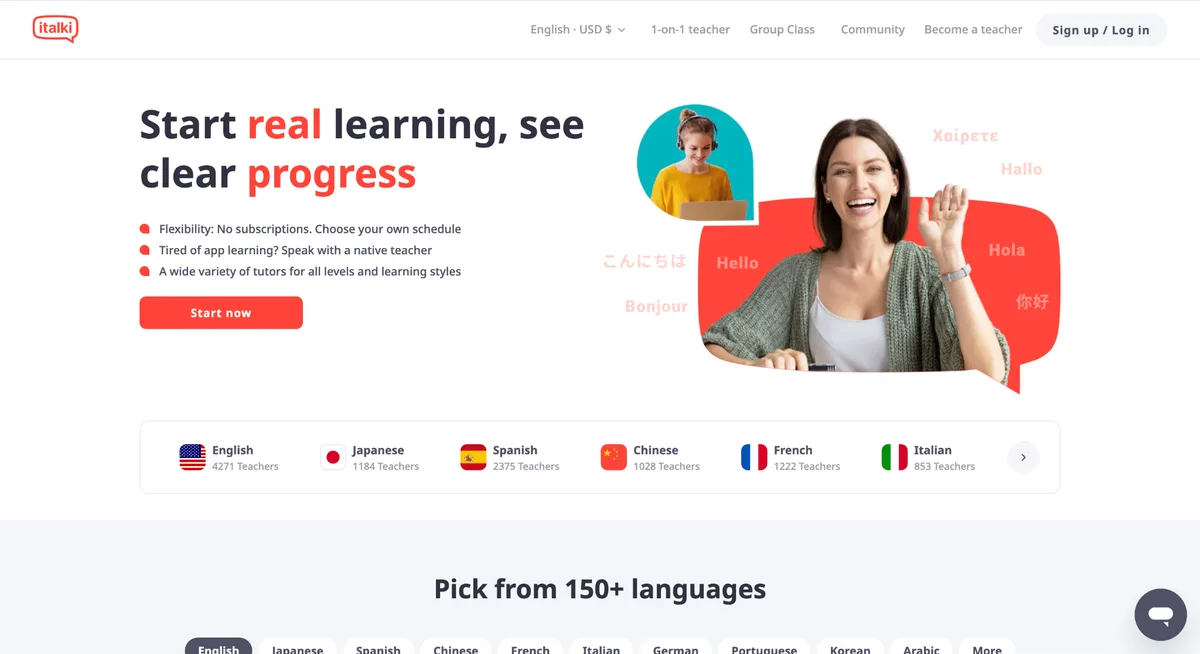
What is italki's main business?
italki connects adult learners with native-speaking tutors across more than 130 languages through one-on-one live video lessons. For Mandarin specifically, the platform gives learners access to both certified professional teachers for structured lessons and community tutors for casual conversation practice. Students pay per lesson rather than committing to bundles, which keeps the financial barrier low. The platform also includes community tools like writing correction and language partner matching, making it more than just a tutor marketplace, and that combination is genuinely rare at this price point.
Where italki pulls ahead
The main problem italki solves is tutor-to-learner mismatch. Their filtering tools let students sort by schedule, budget, teaching style, and specific goals like HSK prep or business Mandarin. That kind of personalized matching keeps lesson completion rates high and trial-to-paid conversion strong, since learners find the right fit before committing.
Reviews at a glance
From what the reviews show, italki has built real trust with a global learner base by keeping access flexible and affordable. Honest feedback tends to flag that tutor quality varies, since each instructor sets their own approach, so finding the right teacher can take a lesson or two. That said, the sheer volume of available tutors means most learners do find a strong match relatively quickly.
2. Polly Lingual: best for affordable live tutoring with self-paced learning
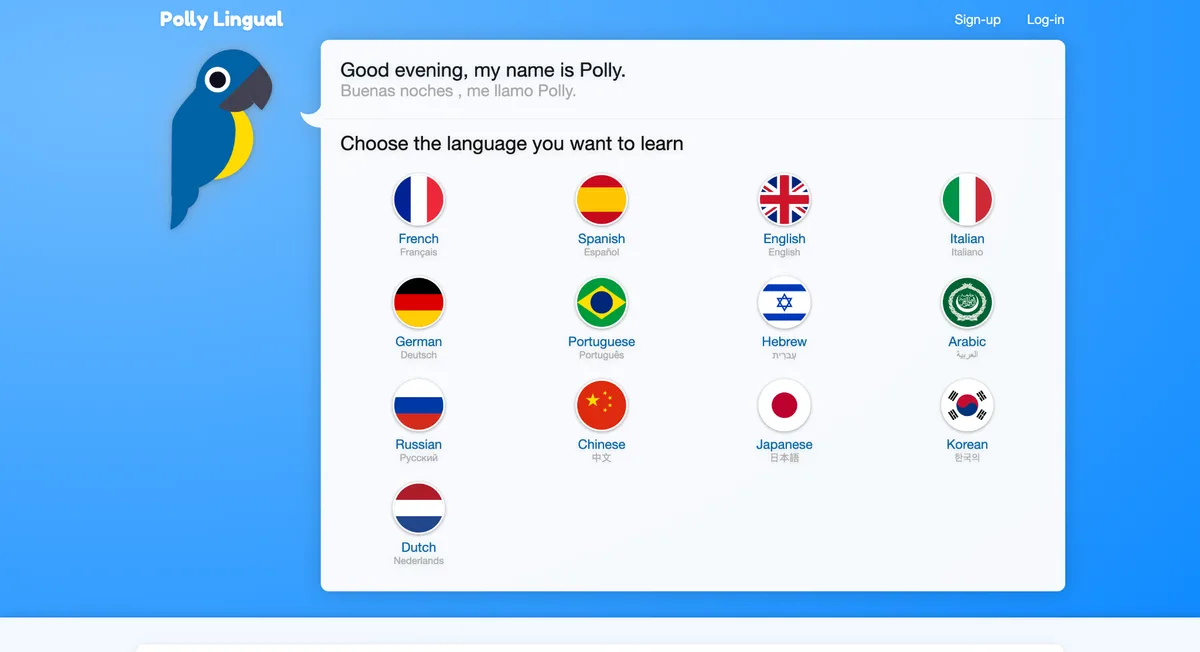
What is Polly Lingual's main business?
Polly Lingual runs a one-to-one live tutoring platform that pairs algorithmically driven interactive lessons with coaching from native speaker language ambassadors. The platform covers pronunciation, conversation practice, and regional dialect nuances across several languages. Their Polly Passport subscription, starting at $2.99 per month, adds self-paced lessons, bookmarked vocabulary, review lists, and verb instruction for learners who want structured progress between live sessions.
Where Polly Lingual pulls ahead
Polly Lingual addresses the cost barrier that keeps many learners from committing to live instruction by pairing affordable subscription access with real human coaching. The hybrid model, combining self-paced algorithmically guided content with live native speaker sessions, gives learners a structure that supports consistent progress even when schedules get unpredictable.
Reviews at a glance
Public review data for Polly Lingual is more limited compared to larger platforms, so drawing strong conclusions from learner reviews is harder here. What the available information does suggest is that the affordable pricing model and hybrid format appeal to learners who want human coaching without the commitment of premium per-lesson pricing. The value-to-cost ratio stands out clearly as their biggest differentiator.
3. Memrise: best for casual to serious self-paced learners
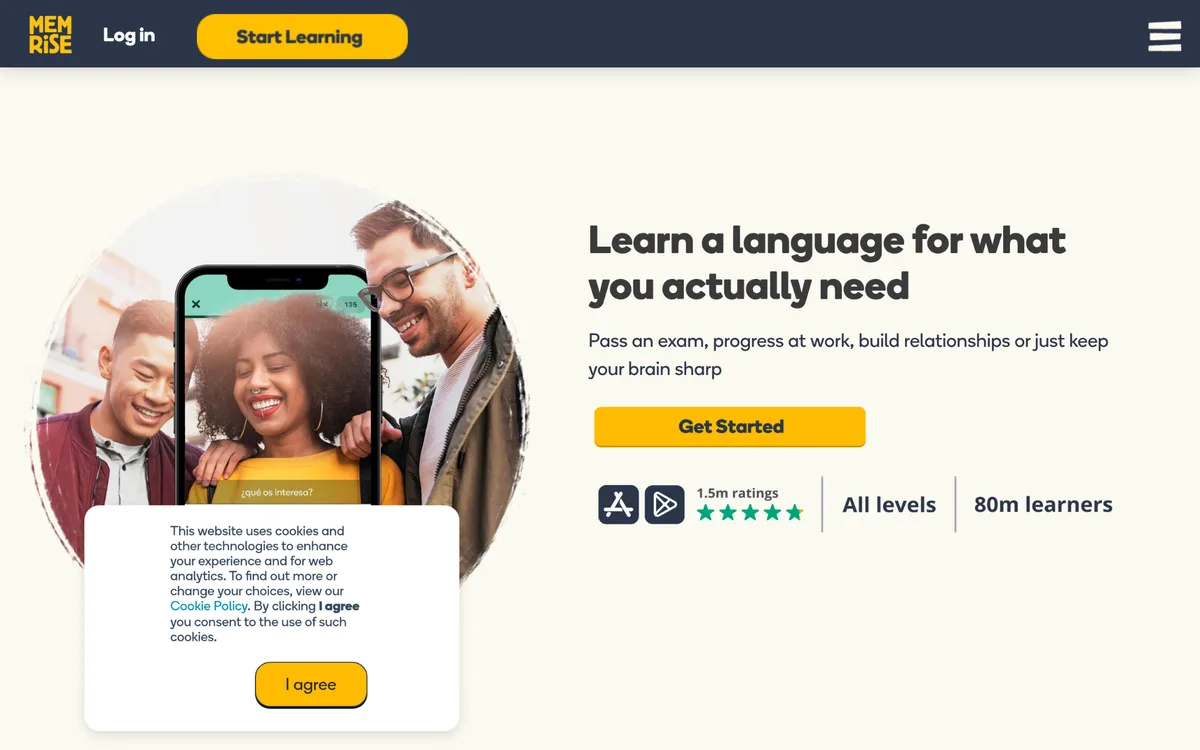
What is Memrise's main business?
Memrise is a language learning platform built around spaced repetition and memory science, covering 200 language combinations across 24 languages. With over 50 million users, the platform blends audio and video content from real native speakers with crowdsourced community learning and machine-learning-powered pronunciation feedback. They have earned recognition from Google Play, including Best App of 2017, which reflects how well the platform applies evidence-based retention techniques to vocabulary building.
Where Memrise pulls ahead
Memrise tackles the vocabulary retention gap that kills Mandarin progress for self-paced learners by using spaced repetition to resurface words at exactly the right intervals. That scientific backing on memory timing, combined with real native speaker audio and video, means learners are not just memorizing characters in isolation but actually hearing how Mandarin sounds in natural speech.
Reviews at a glance
Memrise carries strong credibility with its 50 million-plus user base and multiple platform awards, and the reviews reflect that. Learners consistently point to the spaced repetition system and native speaker video content as the features that actually stuck with them long-term. From what the data shows, it works best as a vocabulary and listening supplement rather than a standalone speaking-fluency tool.
4. FluentU: best for learning through authentic video
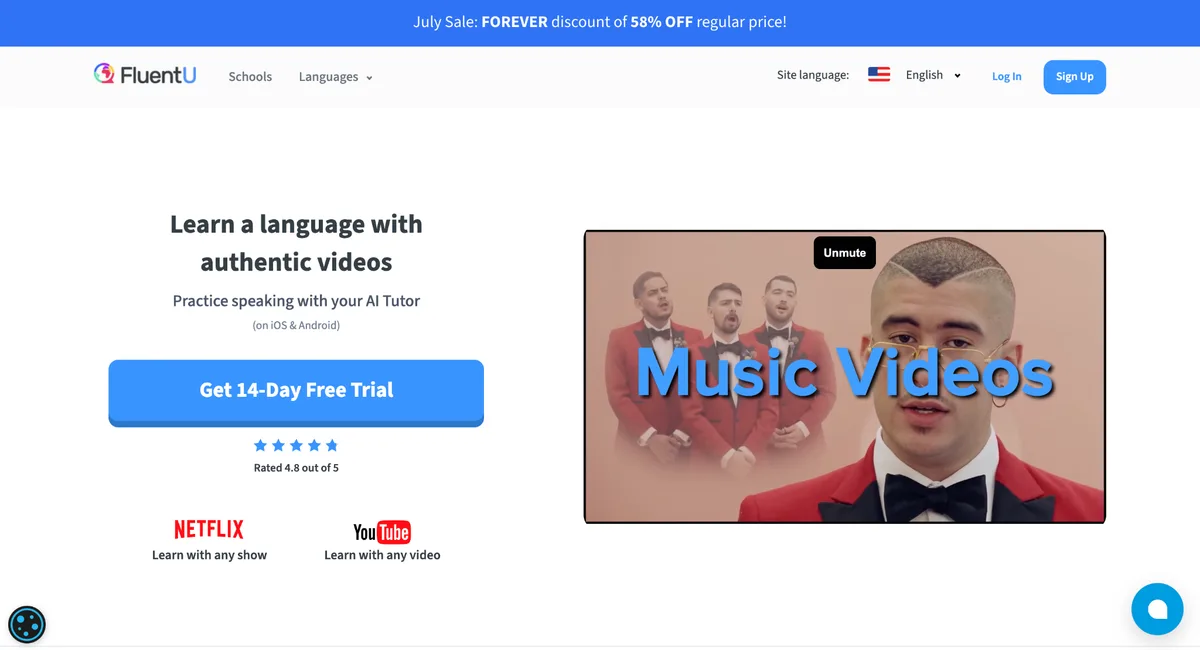
What is FluentU's main business?
FluentU teaches Mandarin Chinese, alongside Spanish, French, Japanese, German, and English, through authentic video content, including movies, TV clips, music videos, and news segments. Every video gets converted into a structured lesson with customized subtitles, a built-in dictionary with context-specific definitions, and an intelligent learning engine that adapts to each learner's progress. The approach works for both beginners who need scaffolding and advanced learners who want exposure to real, unscripted Mandarin.
Where FluentU pulls ahead
FluentU solves the gap between textbook Mandarin and how native speakers actually talk, by putting learners inside real media from day one rather than scripted practice dialogues. That contextual immersion approach builds comprehension and tonal pattern recognition faster than most structured-lesson formats can deliver.
Reviews at a glance
FluentU's review sentiment leans positive among learners who want listening comprehension and vocabulary in context. The interactive subtitle and dictionary features get mentioned often as genuinely useful rather than gimmicky. From what the available feedback shows, advanced learners tend to get more out of it than complete beginners, simply because the authentic content can feel pretty dense early on.
5. Live Lingua: best for personalized instruction with free resources
What is Live Lingua's main business?
Live Lingua is an online language school offering instruction in 11 languages through certified native-speaking tutors, with fully personalized lesson structures where students choose their tutor, set their goals, and move at their own pace. Lessons run between $27 and $38 per hour depending on the language, which sits at a reasonable mid-range for certified instruction. It is not the cheapest, but the tutor certification requirement justifies the price. They also host the internet's largest free public domain language learning library across 130-plus languages, which adds serious standalone value.
Where Live Lingua pulls ahead
Live Lingua addresses the quality-consistency problem that self-directed learners face by requiring tutor certification rather than relying on a community model where credentials vary widely. Their recognition by Entrepreneur360 as a classic education company in 2015 reflects a learner-first model that puts real outcomes ahead of volume.
Reviews at a glance
Review data for Live Lingua is limited in public databases, but the platform's longevity since 2008 and its Entrepreneur360 recognition suggest a stable, respected operation. The free resource library is frequently cited as a standout benefit even by learners who use it independently without booking paid sessions. That kind of generosity with free content builds real trust.
Behind the ranking: selection criteria
Building this list started with a broad scan of the flexible online Chinese lesson website space, pulling from publicly available sources, including language learning directories, app review platforms, and community forums where actual learners share their experiences.
The data-gathering phase
The initial longlist came together by collecting platform names from multiple sources at once, including structured directories, user-generated review aggregators, language learning community discussions, and editorial roundups from education publications. No single source was treated as authoritative on its own. Instead, a platform had to appear across multiple reference points before making it onto the initial list worth investigating further. This broad sourcing approach reduced the chance of overlooking smaller but genuinely strong platforms.
Which platforms advanced
From the longlist, platforms with insufficient public presence or unverifiable claims were removed early. Review patterns were analyzed across platforms, looking not just at average ratings but at the texture of feedback, noting what learners praised repeatedly and what friction points showed up consistently. Platforms where positive reviews were thin, generic, or suspiciously uniform were deprioritized. Only options with enough real learner feedback to draw honest conclusions moved to the next stage.
Cross-referencing information
Claims made on each platform's own website were checked against what users actually reported in reviews and community discussions. Where a platform advertised certified tutors or personalized lesson plans, those claims were weighed against whether learners described that experience in their own words. Gaps between marketing language and reported user experience flagged platforms for closer scrutiny. Platforms where the real-world learner experience lined up well with the stated offering earned higher confidence in their inclusion.
Tracking authority signals
Signals of genuine standing in the language education space were factored in throughout. These included awards from recognized app platforms, mentions in education-focused publications, and evidence of original research or methodology development rather than just feature replication. A platform recognized by Google Play, cited by Entrepreneur360, or with a documented history of building out new approaches carried more weight than one operating quietly without any third-party recognition.
Mandarin-focused proof
The final filter was relevance to Chinese Mandarin learning. Platforms with dedicated Mandarin instruction pages, verified tutor profiles with native Mandarin credentials, learner reviews mentioning Chinese language progress, or explicit HSK-aligned curriculum features scored higher. General language apps that technically include Chinese as one of dozens of options but showed no particular depth in Mandarin instruction were excluded, even if their overall platform quality was solid.
How to decide among these platforms
With five strong options on this list, the right choice really comes down to your specific situation. A busy professional preparing for HSK 4 needs a different platform than a retiree learning conversational Mandarin for an upcoming trip. Here is what to weigh before committing.
- Industry experience: look at how long the platform has operated and whether it has a demonstrated history in language education, not just general ed-tech.
- Features and delivery: decide whether you need live tutor sessions, self-paced content, community tools, or a mix. Not every platform delivers all three at the same quality level.
- Pricing structure: compare per-lesson pricing against subscription models based on how consistently you plan to study. Infrequent learners often do better with pay-per-lesson flexibility, like italki or Live Lingua, while daily learners may extract more value from a subscription.
- Results measurement: check whether the platform offers any way to track progress toward specific goals, such as HSK level advancement, rather than just lesson count.
- Compliance and fit: for parents enrolling younger learners, verify age restrictions and regional tutor availability. For exam-focused learners, confirm the tutors are familiar with HSK standards and CEFR benchmarks.
What this means for you
The best flexible online Chinese lesson website is the one that fits your schedule, your goals, and your budget without forcing you to compromise on tutor quality. Platforms like italki and Live Lingua shine for live human connection, while Memrise and FluentU serve learners who build progress between sessions through self-paced content. As demand for Mandarin skills keeps growing globally, these platforms will only get more competitive, which means better options and better pricing for learners at every level.